本文转载于Aesthetic Surgery Journal,不代表本网站赞同其观点和对其真实性负责,我们只作于阅读分享,非商业用途,如若侵权,请告知删除。
Ann Q. Tran, MD ; Nicole Topilow, MD; Andrew Rong, MD; Patrice J. Persad, PhD; Michael C. Lee; James H. Lee; Apostolos G. Anagnostopoulos, MD; and Wendy W. Lee, MD, MS
Abstract
Background: Hypochlorous acid (HA) has both anti-microbial and wound-healing properties with a growing role for utilization in pre-procedural care on the face.
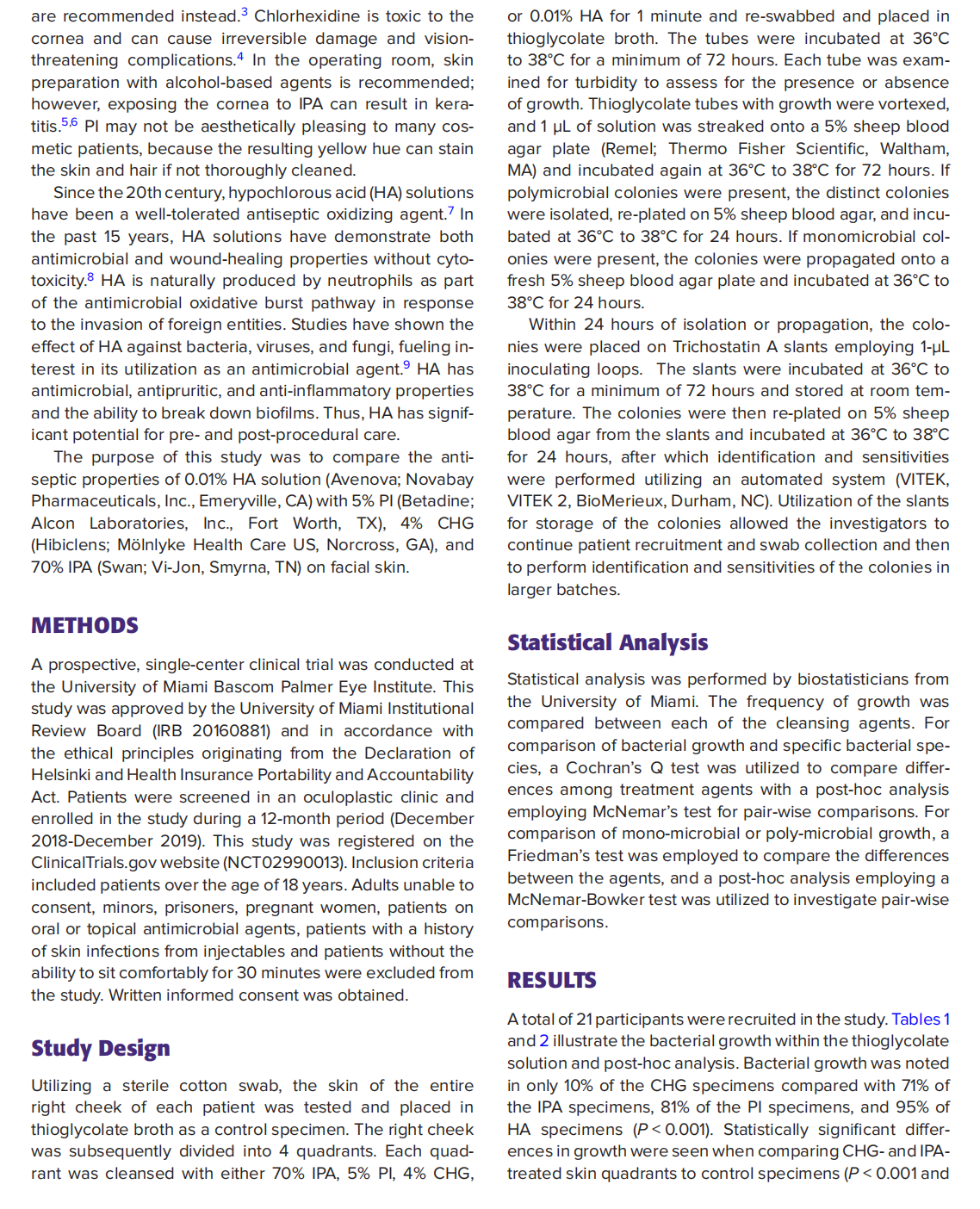
Objectives: The authors sought to compare the antiseptic property of 0.01% HA solution, 5% povidone iodine (PI), 4% chlorhexidine gluconate (CHG), and 70% isopropyl alcohol (IPA) antiseptic on facial skin.
Methods: This was a prospective single-center clinical trial.
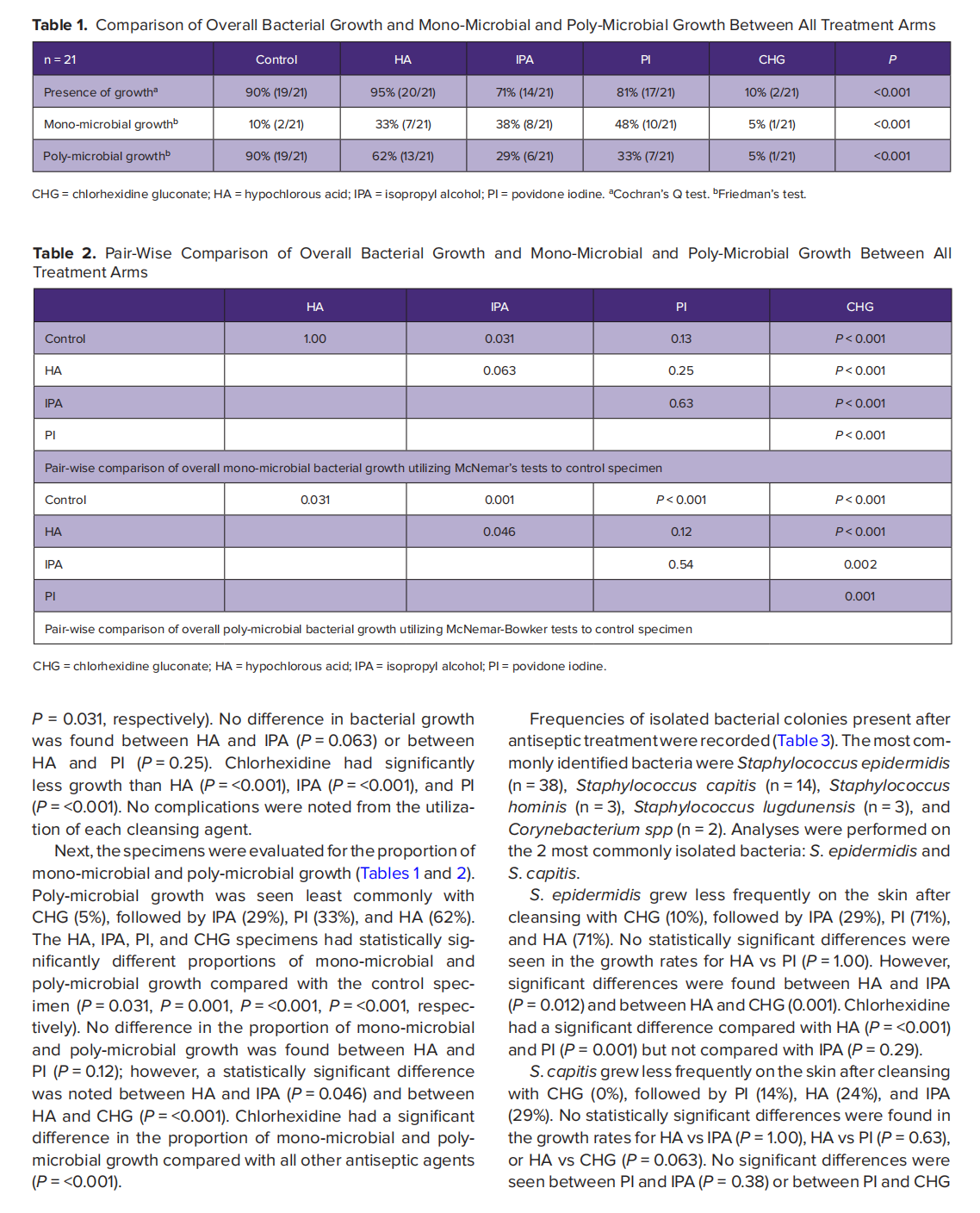
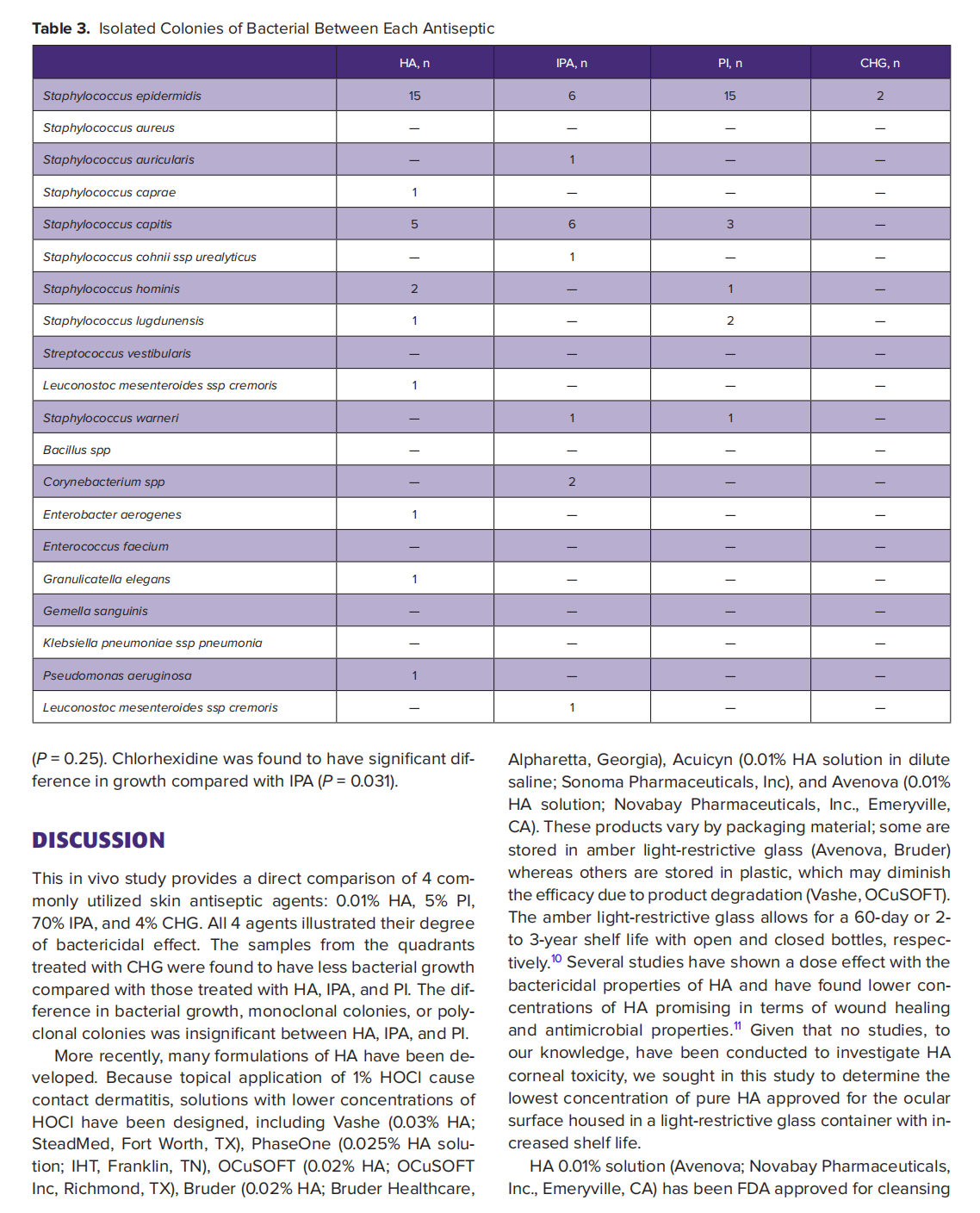
Results: A total of 21 participants were recruited. Bacterial growth was seen in CHG (10%), IPA (71%), PI (81%), and HA (95%) of specimens (P < 0.001). CHG had less growth compared with HA (P = <0.001), IPA (P = <0.001), and PI (P = <0.001). No difference in bacterial growth was noted between HA and IPA (P = 0.063) or HA and PI (P = 0.25). Significant differences in mono-microbial and poly-microbial growth were seen between HA and IPA (P = 0.046) and HA and CHG (P = <0.001). Staphylococcus epidermidis grew less frequently in CHG (10%), followed by IPA (29%), PI (71%), and HA (71%). Staphylococcus capitis grew less frequently in CHG (0%), followed by PI (14%), HA (24%), and IPA (29%).
Conclusions: CHG reduced the bacterial growth compared with HA, PI, and IPA. However, HA, PI, and IPA had insignificant differences in bactericidal effects. Our study provides a supporting role of HA to be considered as an antiseptic.
本文转载于Aesthetic Surgery Journal,不代表本网站赞同其观点和对其真实性负责,我们只作于阅读分享,非商业用途,如若侵权,请告知删除。