本文转载于Journal of Pediatric Urology (2022) 18, 344_349,不代表本网站赞同其观点和对其真实性负责,我们只作于阅读分享,非商业用途,如若侵权,请告知删除。
Minh-Tung Do a , Louis Kim b , Young Jae Im a,b , Kwanjin Park a,b, *
Summary
Introduction The bladder scanner (BS), a portable ultrasound device specialized in bladder volume measurement, has been developed and applied to clinical assessment of postvoid residual urine, which is a requisite in evaluating patients with voiding dysfunction.
However, experiences in the application of the BS to the pediatric population remain limited despite commonly encountered reluctance to catheterization. This prospective observational study aimed to evaluate the correlation and accuracy of the newly developed pediatric module of the BS (BioCon-900) in measuring bladder volume in children 0e6 years.
Materials and methods
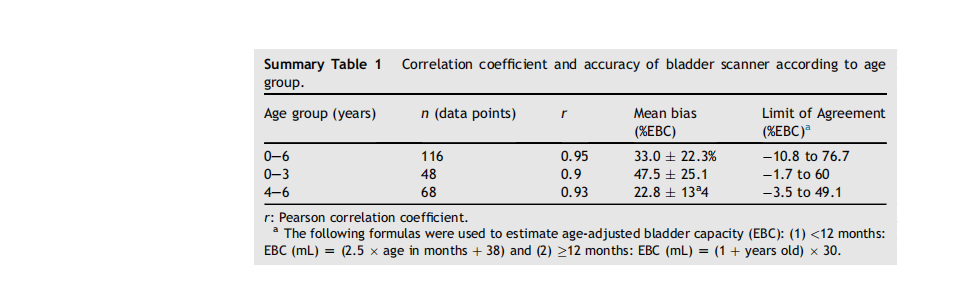
This study included 29 patients scheduled to undergo preventive untethering for their spinal dysraphism. When they undergo cystometry for the confirmation of normal neurologic function, bladder volume was measured by BS when recorded volume infusion reached each quartile of the age-adjusted estimated bladder capacity (EBC). The difference (bias) between measured and infused volume was expressed as a percentage of EBC (%EBC). The correlation coefficient and the Bland_Altman plot were obtained to determine the discriminating power and accuracy, respectively. The acceptable limit was set as 30%EBC.
Results
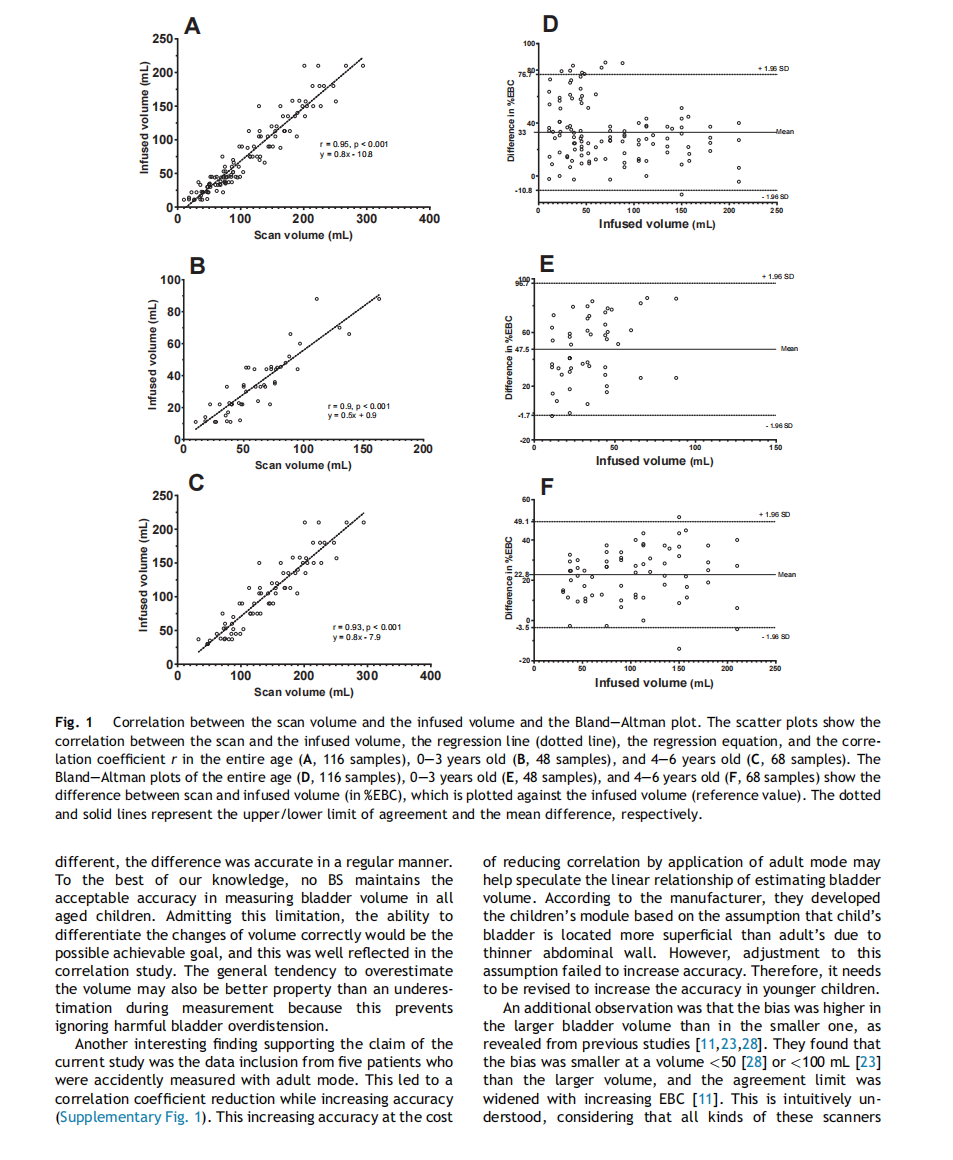
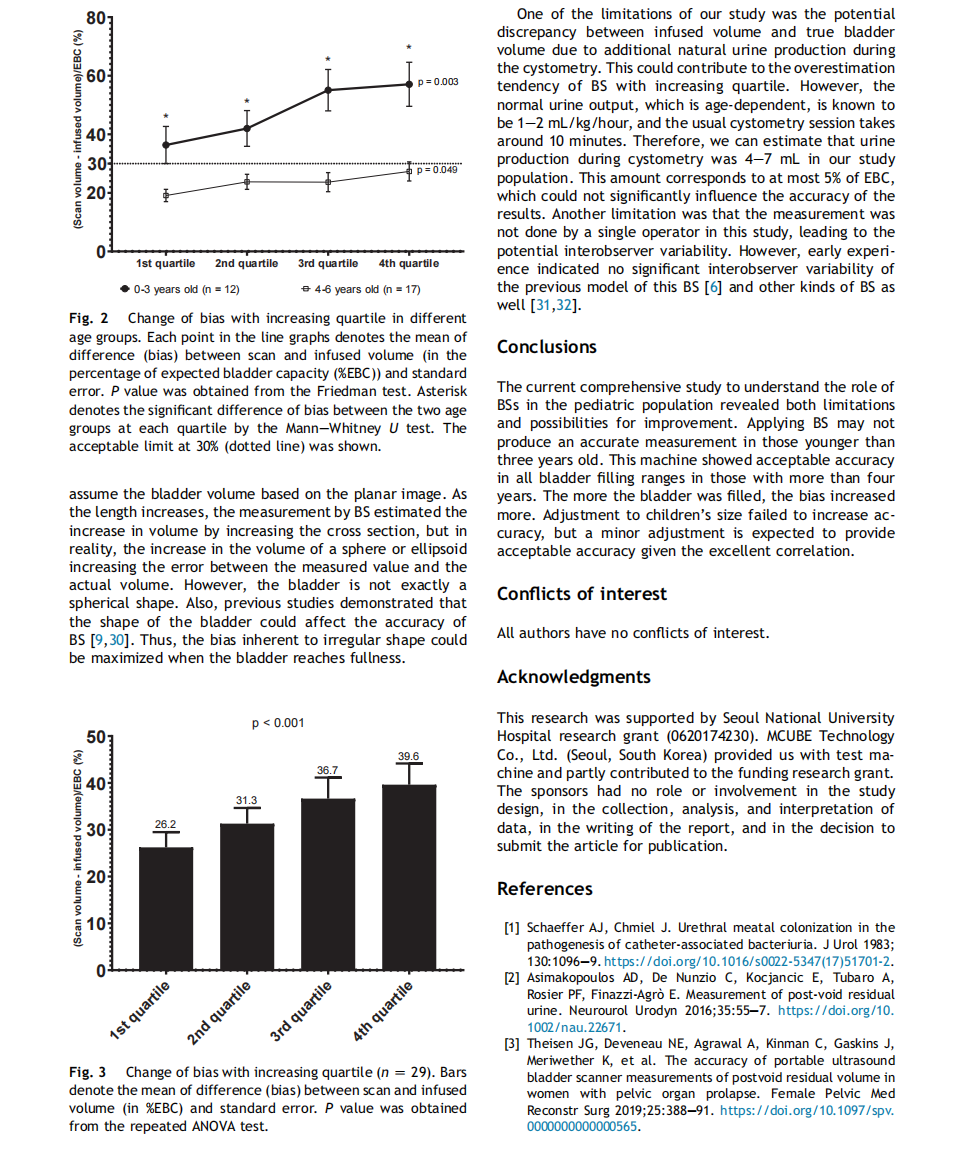
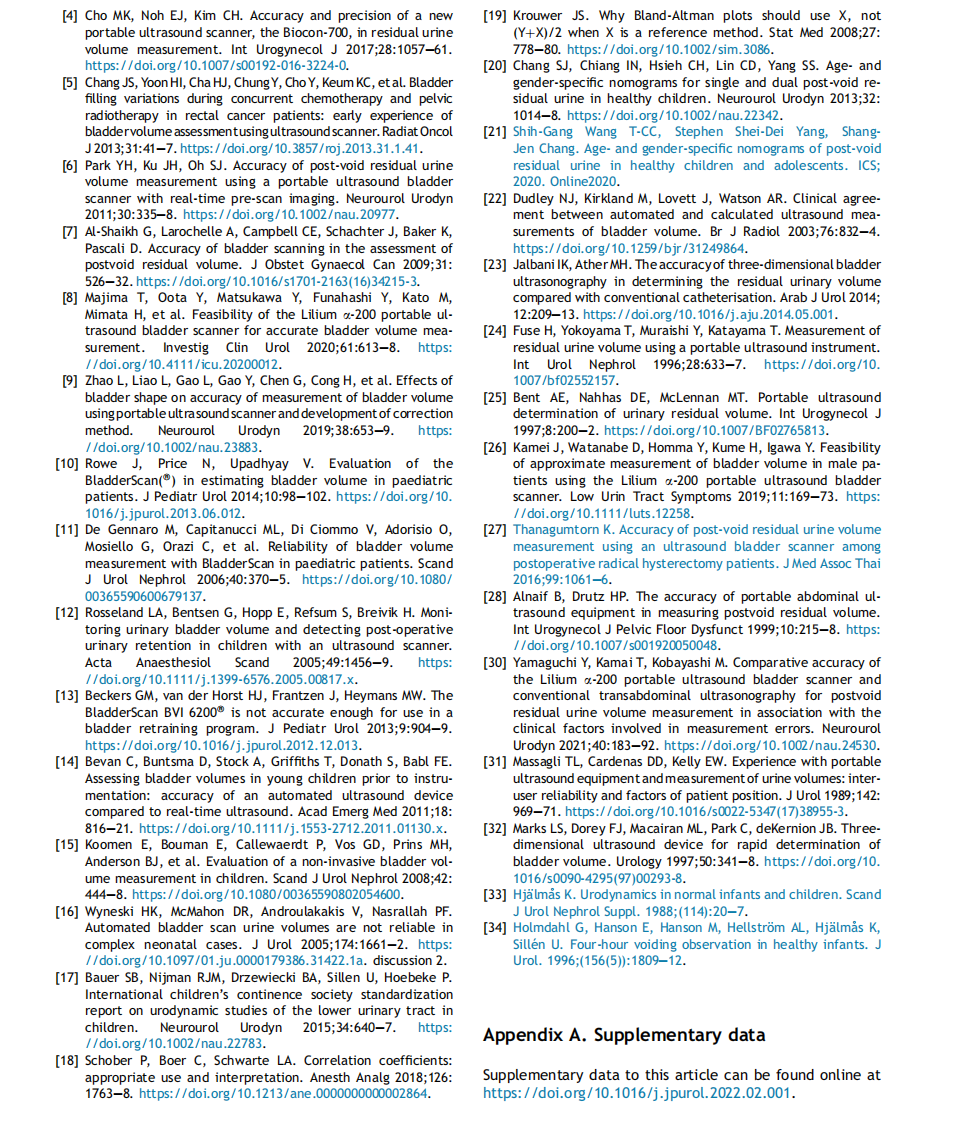
A strong correlation between the measured and infused volume (r = 0.95, P < 0.001) was found for the entire age range. This excellent correlation remained comparable between children less than three years and the older ones. Bladder volume tended to be overestimated, and the mean bias was 33 ± 22.3%EBC, and it became higher with increasing quartiles. The accuracy was acceptable in all ranges of measurement in the older group and first and second quartiles in the younger one.
Discussion
We have first evaluated the potential use of BS in 0_3 years old children and compared the results with 4_6- year-old children in whom the accuracy of BS has been demonstrated. The strong point of our study was the inclusion of data spanning all quartiles of bladder volume. The use of infused volume as reference enabled us to assess the accuracy in a more precise way than the use of ultrasound. Despite the good discriminating power, the accuracy was not acceptable in higher quartiles in the younger group. If the trend of overestimation especially higher volume, could be understood prior to measurement, it would be helpful to assume the real val.
Conclusions
The children’s module in BS showed excellent discriminating power and generally acceptable accuracy in more than four-year-old children. This may lose accuracy in higher quartiles among less than three years old children.
本文转载于Journal of Pediatric Urology (2022) 18, 344_349,不代表本网站赞同其观点和对其真实性负责,我们只作于阅读分享,非商业用途,如若侵权,请告知删除。