本文转载Tazawa et al. BMC Oral Health (2023) 23:111,不代表本网站赞同其观点和对其真实性负责,我们只作于阅读分享,非商业用途,如若侵权,请告知删除。
Kento Tazawa1,2, Rutuja Jadhav1 , Mariane Maffei Azuma1 , J. Christopher Fenno3 , Neville J. McDonald1 and Hajime Sasaki1*
Abstract
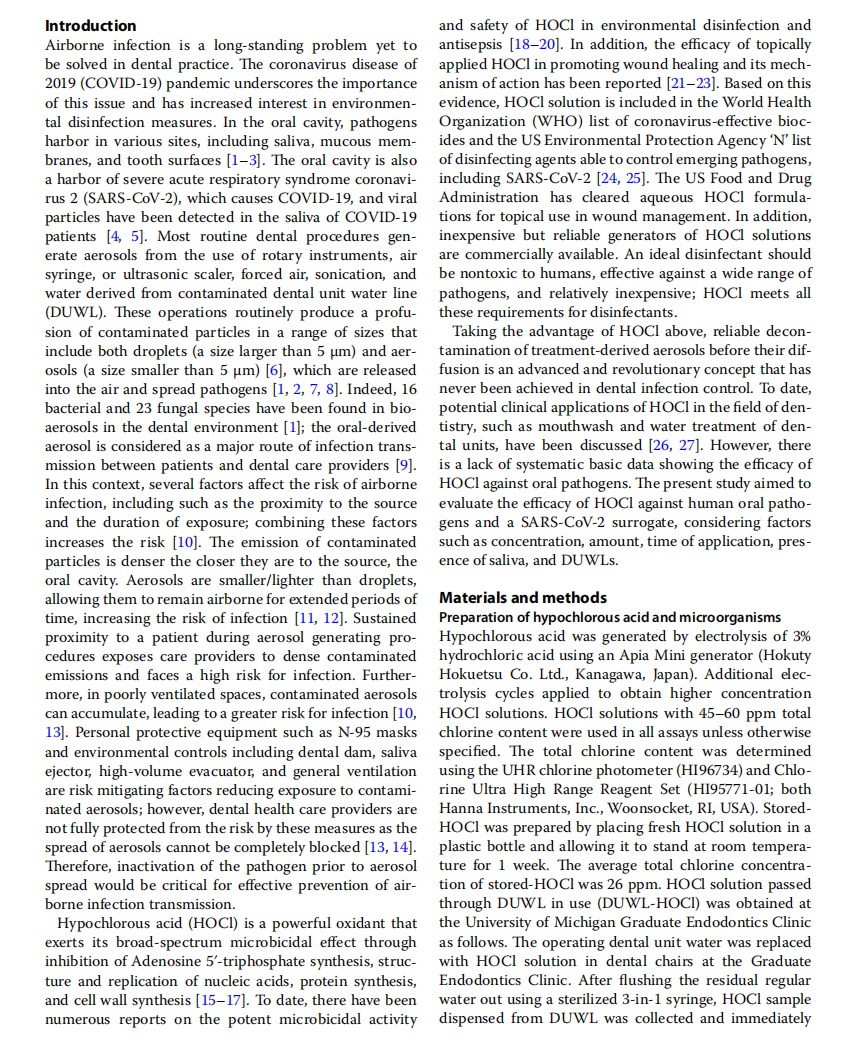
Background Droplets and aerosols produced during dental procedures are a risk factor for microbial and viral transmission. Unlike sodium hypochlorite, hypochlorous acid (HOCl) is nontoxic to tissues but still exhibits broad microbicidal effect. HOCl solution may be applicable as a supplement to water and/or mouthwash. This study aims to evaluate the effectiveness of HOCl solution on common human oral pathogens and a SARS-CoV-2 surrogate MHVA59 virus, considering the dental practice environment.
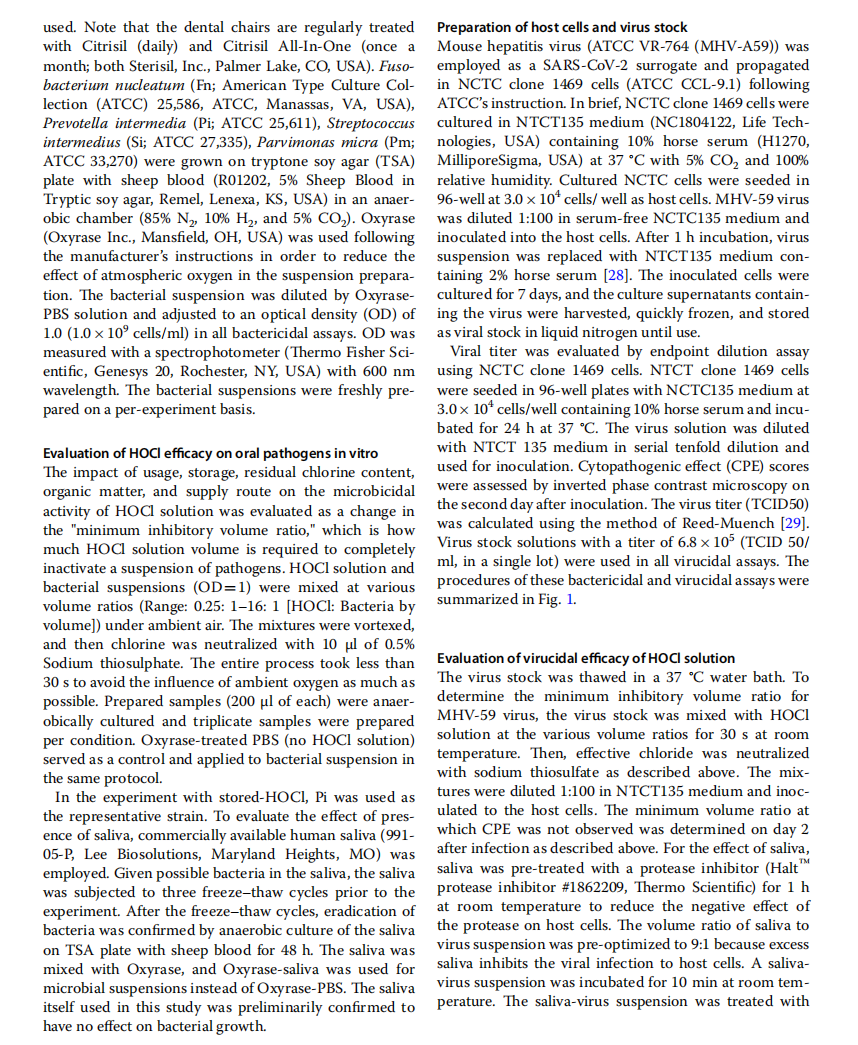
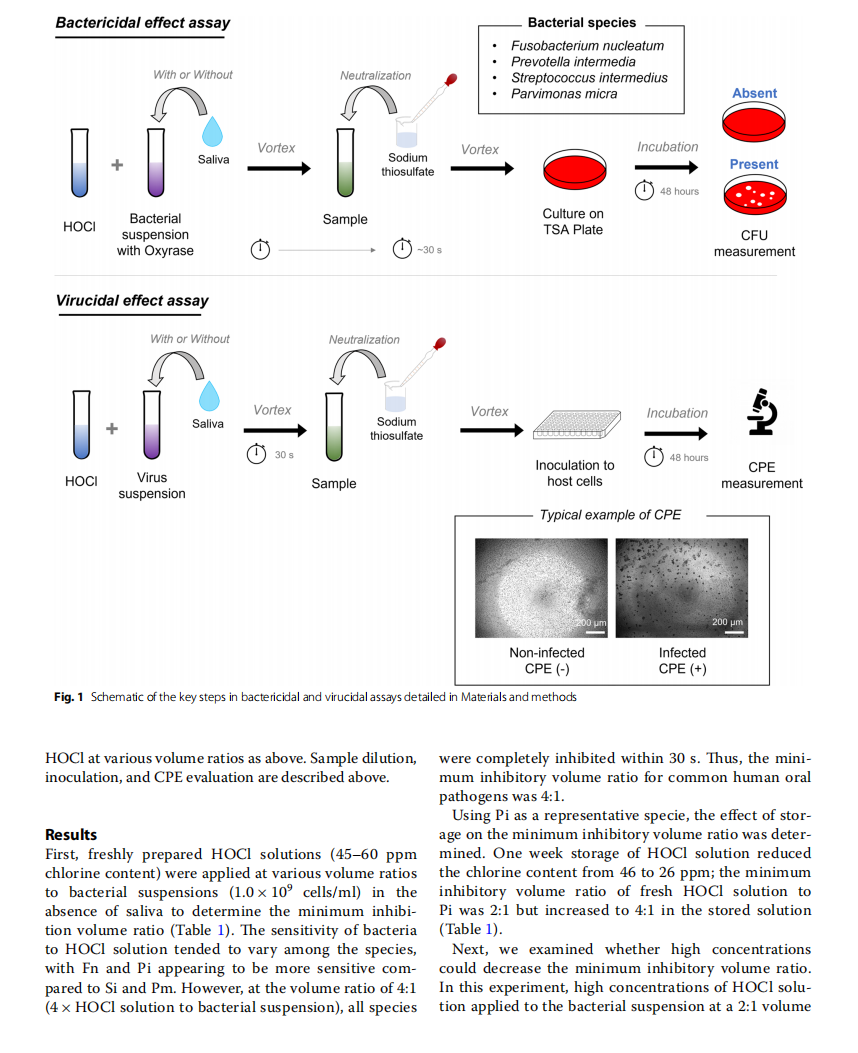
Methods HOCl was generated by electrolysis of 3% hydrochloric acid. The effect of HOCl on human oral pathogens, Fusobacterium nucleatum, Prevotella intermedia, Streptococcus intermedius, Parvimonas micra, and MHV A59 virus was studied from four perspectives: concentration; volume; presence of saliva; and storage. HOCl solution in different conditions was utilized in bactericidal and virucidal assays, and the minimum inhibitory volume ratio that is required to completely inhibit the pathogens was determined.
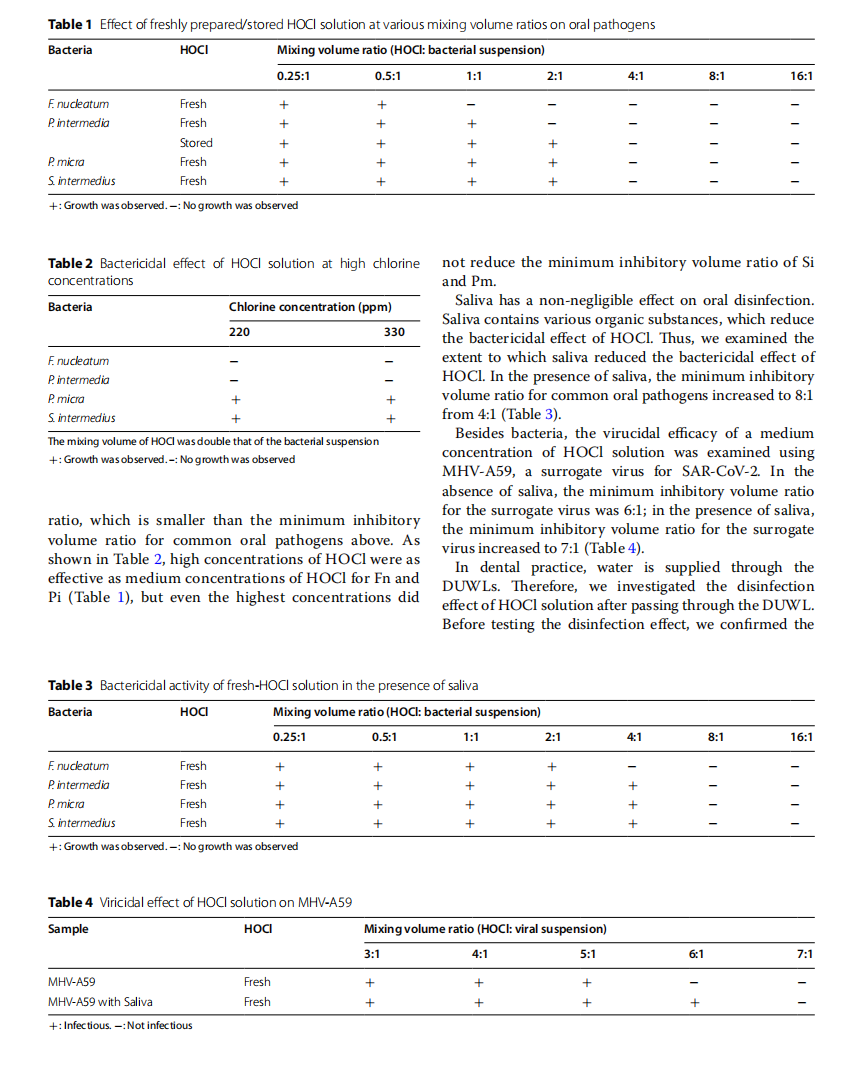
Results In the absence of saliva, the minimum inhibitory volume ratio of freshly prepared HOCl solution (45–60 ppm) was 4:1 for bacterial suspensions and 6:1 for viral suspensions. The presence of saliva increased the minimum inhibitory volume ratio to 8:1 and 7:1 for bacteria and viruses, respectively. Applying a higher concentration of HOCl solution (220 or 330 ppm) did not lead to a significant decrease in the minimum inhibitory volume ratio against S. inter-medius and P. micra. The minimum inhibitory volume ratio increases in applications of HOCl solution via the dentalunit water line. One week of storage of HOCl solution degraded HOCl and increased the minimum growth inhibition volume ratio.
Conclusions HOCl solution (45–60 ppm) is still effective against oral pathogens and SAR-CoV-2 surrogate viruses even in the presence of saliva and after passing through the dental unit water line. This study indicates that the HOCl solution can be used as therapeutic water or mouthwash and may ultimately reduce the risk of airborne infection in dental practice.
Keywords Hypochlorous acid (HOCl), Dental practice, Airborne infection, Oral pathogens, SARS-CoV-2, Disinfectant, Mouthwash, Minimum inhibitory volume ratio
本文转载Tazawa et al. BMC Oral Health (2023) 23:111,不代表本网站赞同其观点和对其真实性负责,我们只作于阅读分享,非商业用途,如若侵权,请告知删除。