本文转载于Biomedicines 2025, 13, 2921,不代表本网站赞同其观点和对其真实性负责,我们只作于阅读分享,非商业用途,如若侵权,请告知删除。
Vanda Haralovi´c 1 , Mislav Mokos 1 , Sanja Špoljar 1 , Lorena Dolaˇcki 2 , Mirna Šitum 1,2 and Liborija Lugovi´c-Mihi´c 1,2,*
1Department of Dermatovenereology, University Hospital Center Sestre Milosrdnice, Vinogradska cesta 29, 10000 Zagreb, Croatia; 该Email地址已收到反垃圾邮件插件保护。要显示它您需要在浏览器中启用JavaScript。 (V.H.)
2School of Dental Medicine, University of Zagreb, Gunduli´ceva 5, 10000 Zagreb, Croatia
*Correspondence: 该Email地址已收到反垃圾邮件插件保护。要显示它您需要在浏览器中启用JavaScript。; Tel.:+385-(01)-3787-111
Abstract
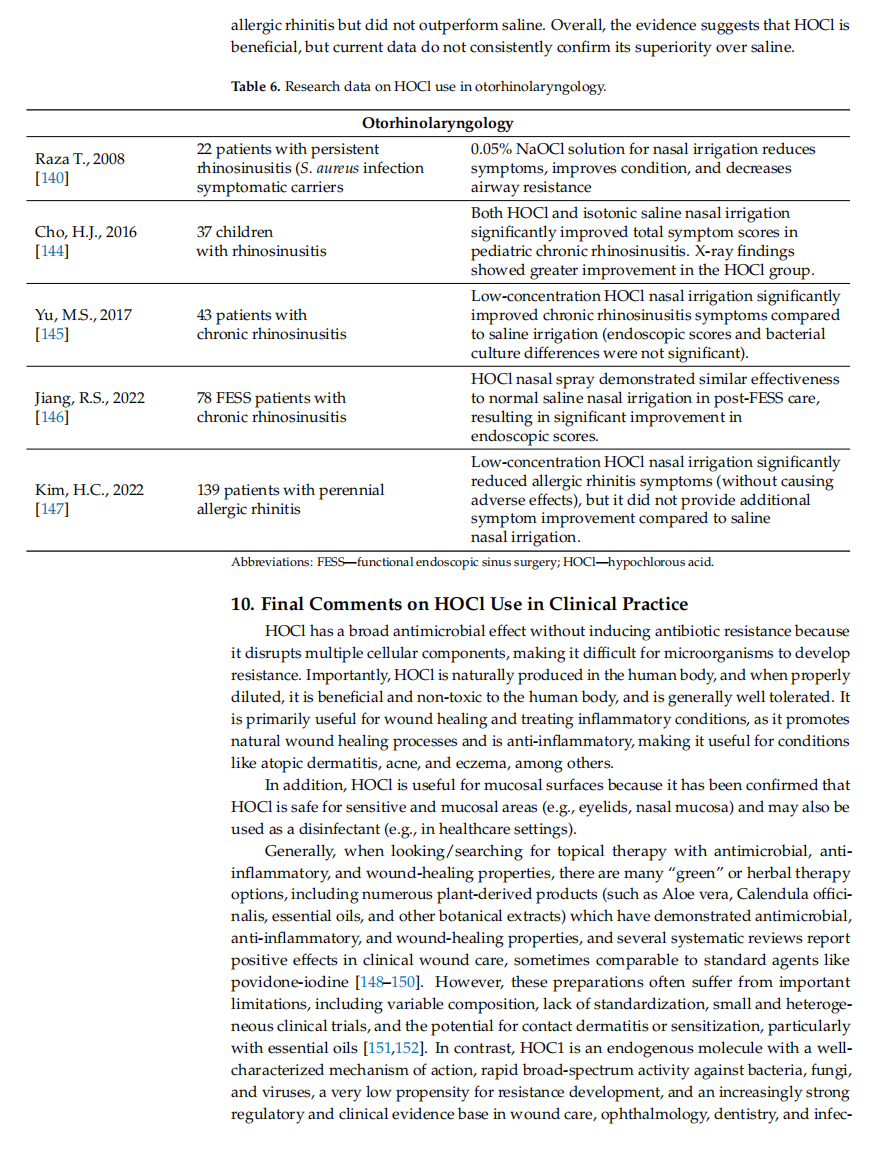
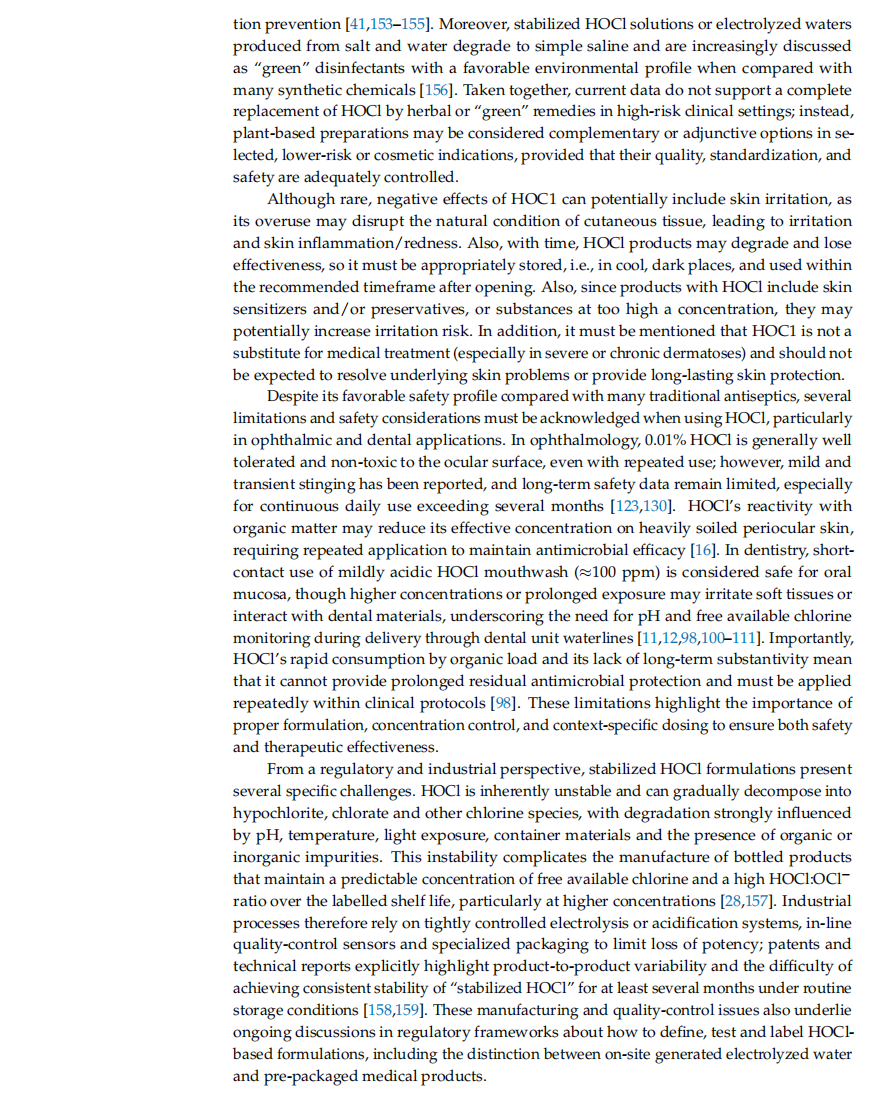
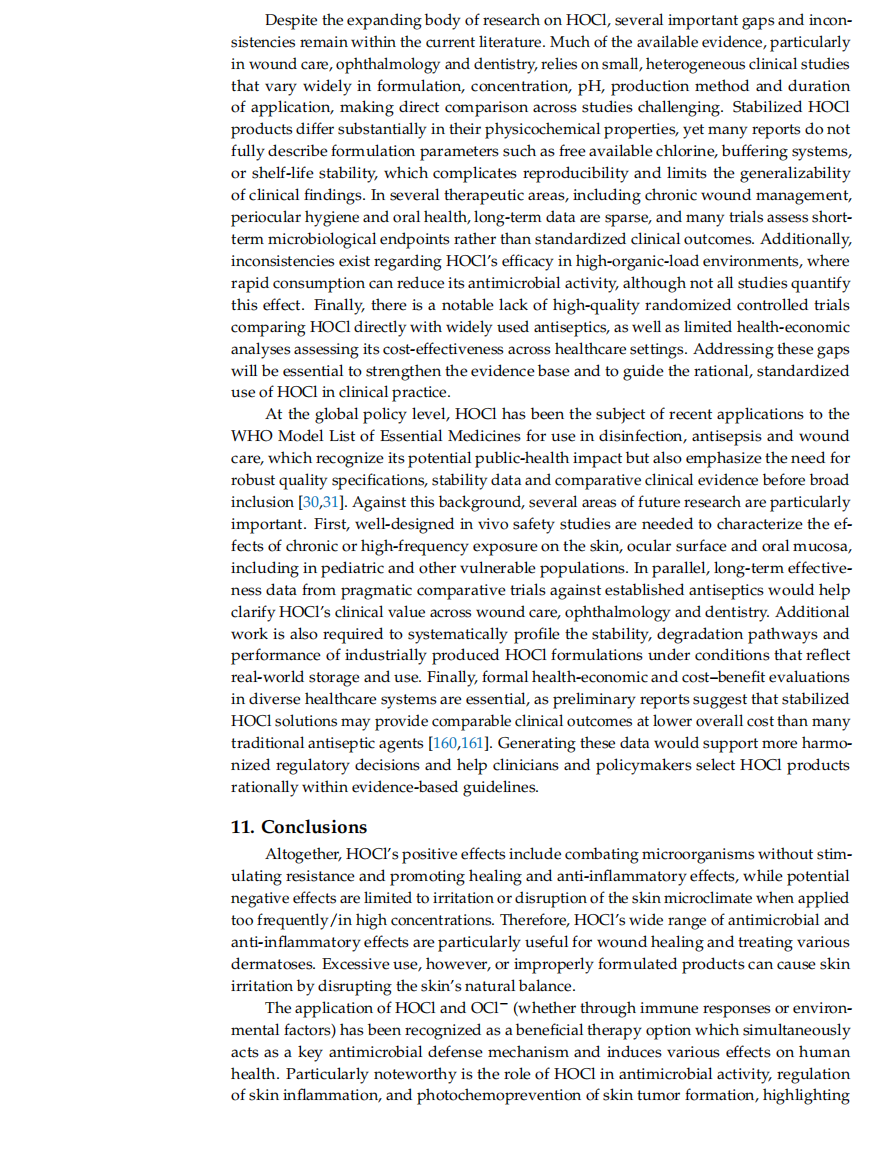
Background: Hypochlorous acid (HOCl) is an integral component of the human innate immune system. It possesses antimicrobial properties and is available in solution, dermal spray, and scar gel forms. Objectives/Methods: This review presents data from studies on the clinical use of HOCl in various specialties, including der-matology, surgery, dentistry, ophthalmology, and rhinology. Results: Due to its antiinflammatory/antimicrobial/immunomodulatory and healing properties, HOCl is advantageous in treating various skin disorders: ulcus cruris (and wound care), diabetic ulcers, atopic dermatitis, seborrheic dermatitis, pruritus, acne vulgaris, etc. Also, the application of a HOCl spray/gel after surgical procedures may prevent infection, reduce inflammation, and accelerate healing. HOCl is also effective and safe for the prevention and treatment of hypertrophic and keloid scars. Growing evidence shows a broader role for HOCl in limiting cancer cell survival and slowing tumor growth. It is also important in treating various viral infections like SARS-CoV-2 (coronavirus), influenza, and herpes, thereby helping to prevent the spread of aerosols. In addition, since HOCl is an endogenous compound naturally present in mammals with a high safety profile, it may be an effective bacterial disinfectant in dental waterlines. In ophthalmology, adjuvant treatment with HOCl ophthalmic spray can reduce the duration of antibiotic/corticosteroid use, even in severe blepharitis. To fully harness the protective/therapeutic properties of HOCl, future advancements will rely on the development of new chemical compounds and sophisticated pharmaceutical formulations.Conclusions: The majority of clinical studies have confirmed that HOC1 is useful in therapy, although the results are not entirely consistent. Further research is essential to optimize HOCl dosing and to develop controlled-release systems aimed at maximizing its anti-inflammatory and photoprotective effects while minimizing tissue irritation and damage.
Keywords: topical treatment; antimicrobial therapy; anti-inflammatory drugs; immunomodulator; healing; ulcer; atopic dermatitis; surgical procedures; postoperative care; disinfectant
本文转载于Biomedicines 2025, 13, 2921,不代表本网站赞同其观点和对其真实性负责,我们只作于阅读分享,非商业用途,如若侵权,请告知删除。