本文转载于Aherne et al. BMC Oral Health (2022) 22:415,不代表本网站赞同其观点和对其真实性负责,我们只作于阅读分享,非商业用途,如若侵权,请告知删除。
Olivia Aherne1,2, Roberto Ortiz2 , Magnus M. Fazli3,4 and Julia R. Davies1*
Abstract
Background: Caries and periodontitis are amongst the most prevalent diseases worldwide, leading to pain and loss of oral function for those affected. Prevention relies heavily on mechanical removal of dental plaque biofilms but for populations where this is not achievable, alternative plaque control methods are required. With concerns over unde-sirable side-effects and potential bacterial resistance due to the use of chlorhexidine gluconate (CHX), new antimicrobial substances for oral use are greatly needed. Here we have investigated the antimicrobial effect of hypochlorous acid (HOCl), stabilized with acetic acid (HAc), on oral biofilms and compared it to that of CHX. Possible adverse effects of stabilized HOCl on hydroxyapatite surfaces were also examined.
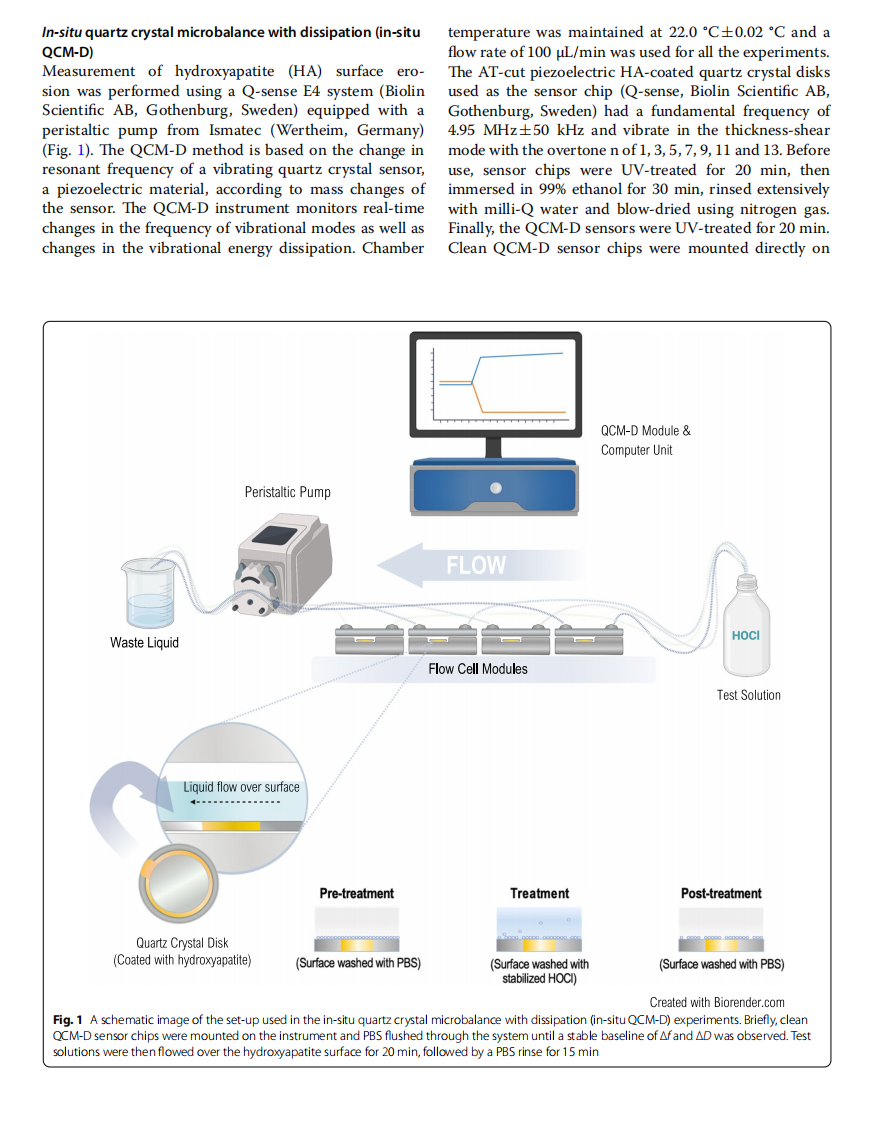
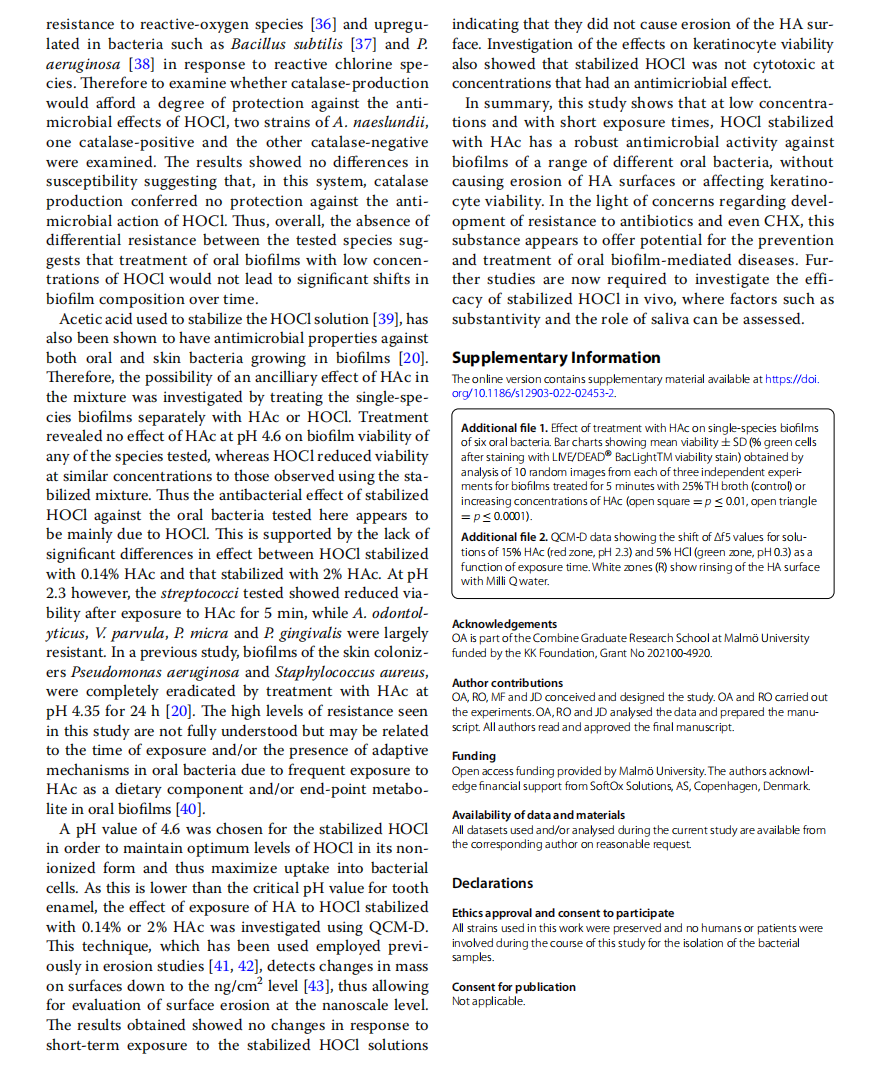
Methods: Single- and mixed-species biofilms of six common oral bacteria (Streptococcus mutans, Streptococcus gordonii, Actinomyces odontolyticus, Veillonella parvula, Parvimonas micra and Porphyromonas gingivalis) within a flow-cell model were exposed to HOCl stabilized with 0.14% or 2% HAc, pH 4.6, as well as HOCl or HAc alone. Biofilm viability was assessed in situ using confocal laser scanning microscopy following LIVE/DEAD® BacLight™ staining. In-situ quartz crystal microbalance with dissipation (QCM-D) was used to study erosion of hydroxyapatite (HA) surfaces by stabilized HOCl.
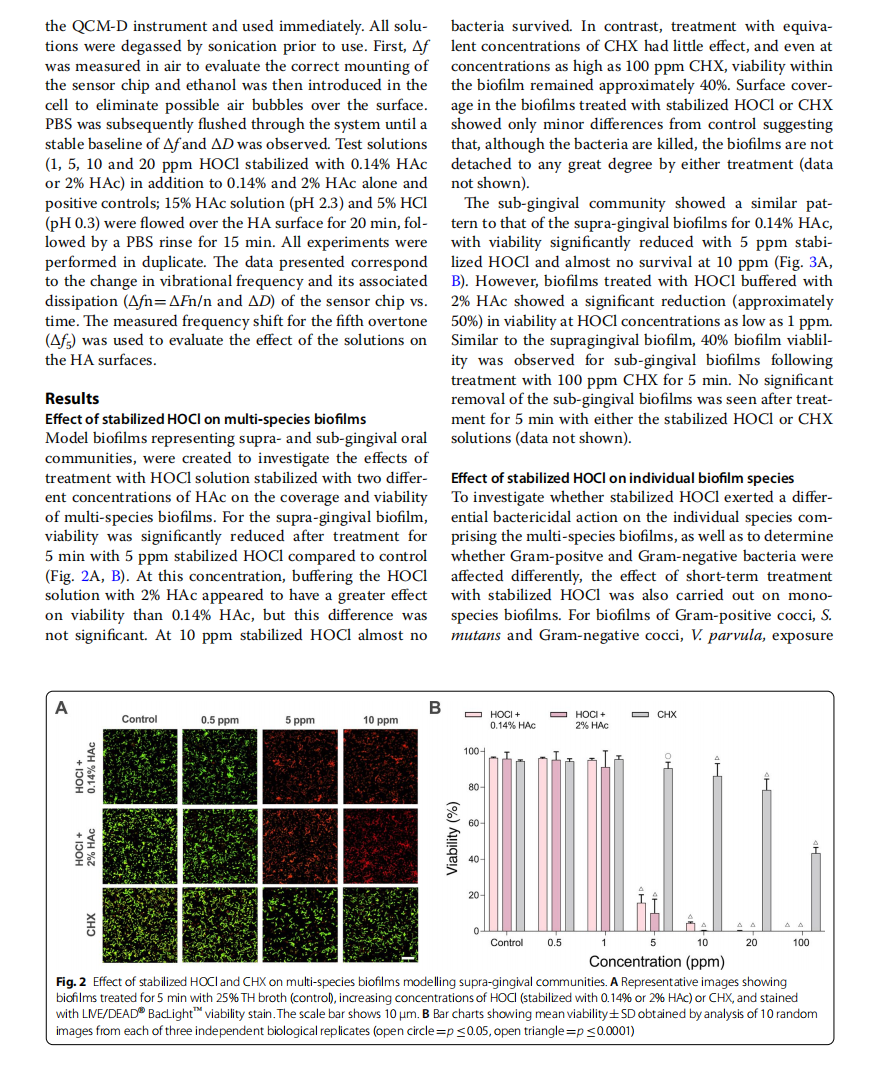
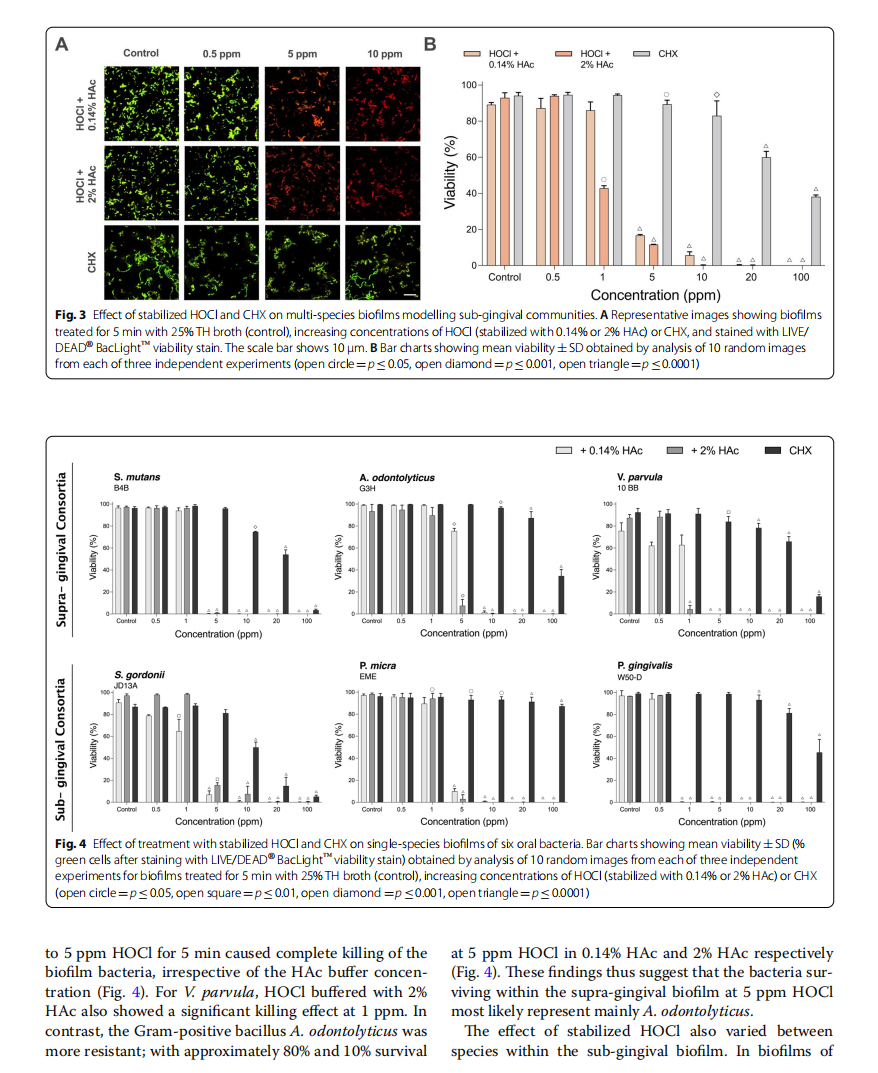
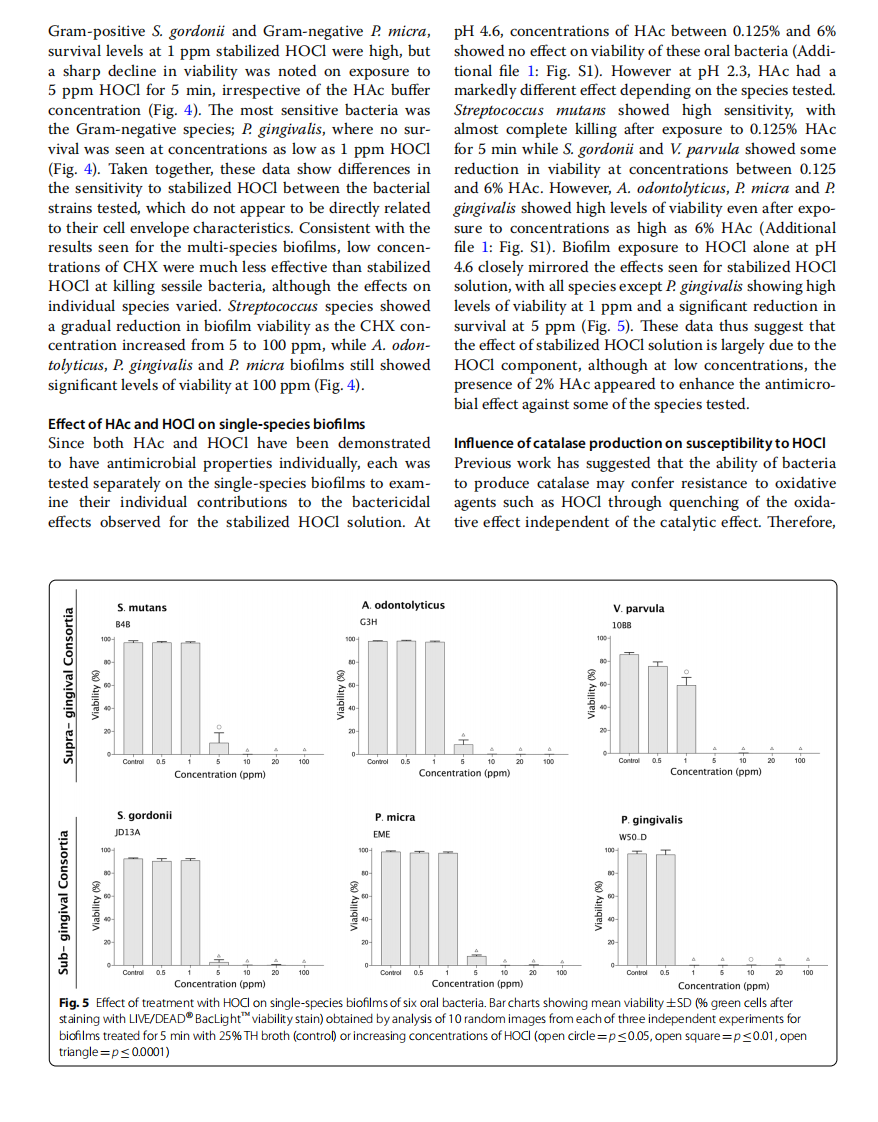
Results: Low concentrations of HOCl (5 ppm), stabilized with 0.14% or 2% HAc, significantly reduced viability in multi-species biofilms representing supra- and sub-gingival oral communities, after 5 min, without causing erosion of HA surfaces. No equivalent antimicrobial effect was seen for CHX. Gram-positive and Gram-negative bacteria showed no significant differential suceptibility to stabilized HOCl.
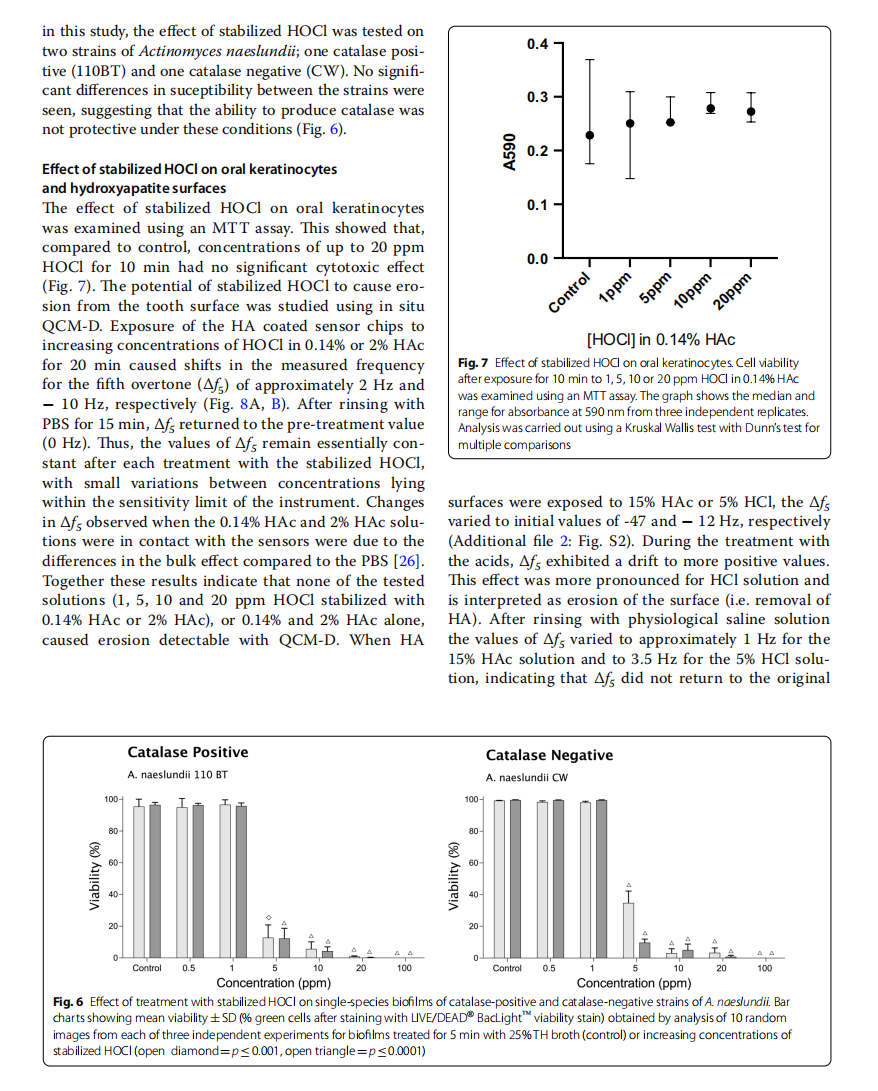
Conclusions: At low concentrations and with exposure times which could be achieved through oral rinsing, HOCl stabilized with HAc had a robust antimicrobial activity on oral biofilms, without causing erosion of HA surfaces or affecting viability of oral keratinocytes. This substance thus appears to offer potential for prevention and/or treatment of oral biofilm-mediated diseases.
Keywords: Biofilm control, Oral disease, Caries, Periodontitis, Oral infection
本文转载于Aherne et al. BMC Oral Health (2022) 22:415,不代表本网站赞同其观点和对其真实性负责,我们只作于阅读分享,非商业用途,如若侵权,请告知删除。