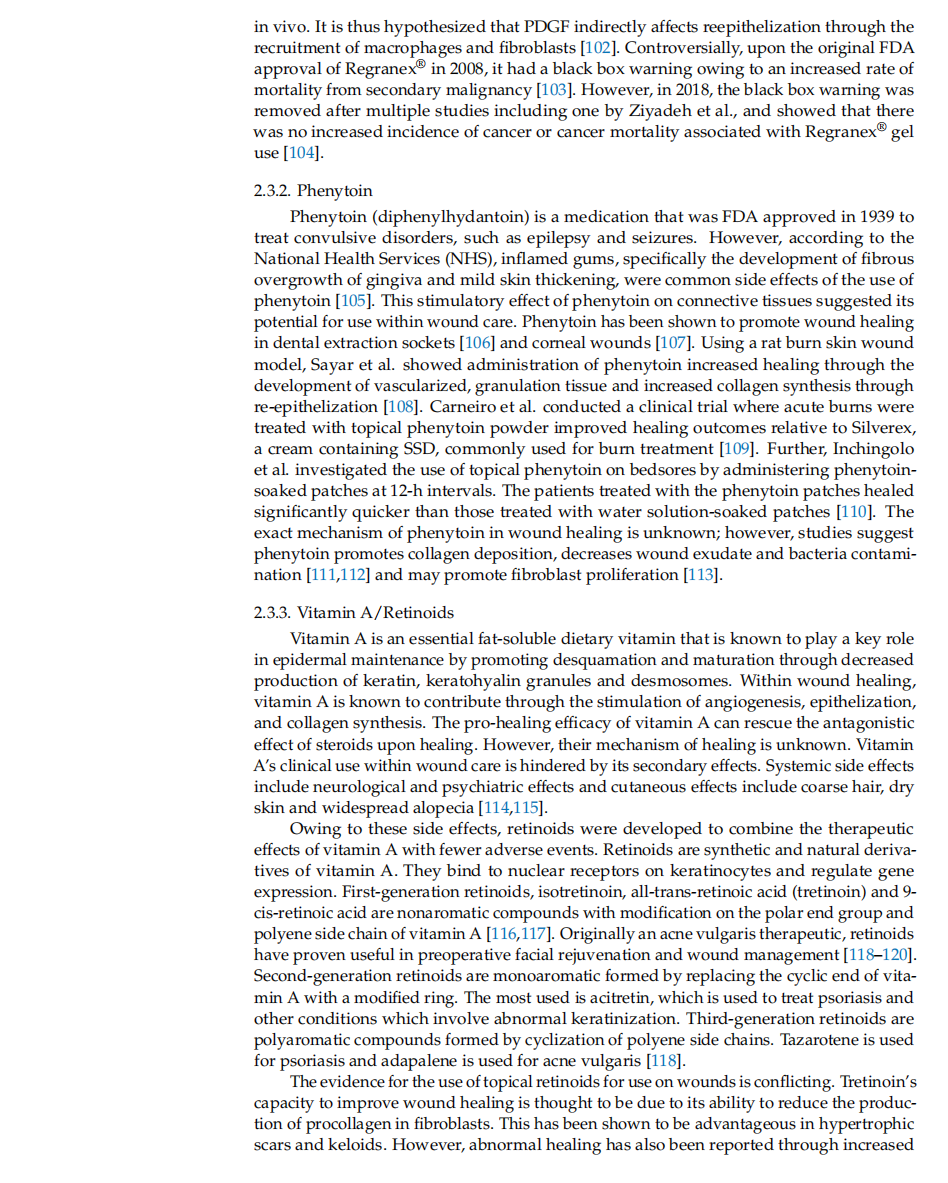
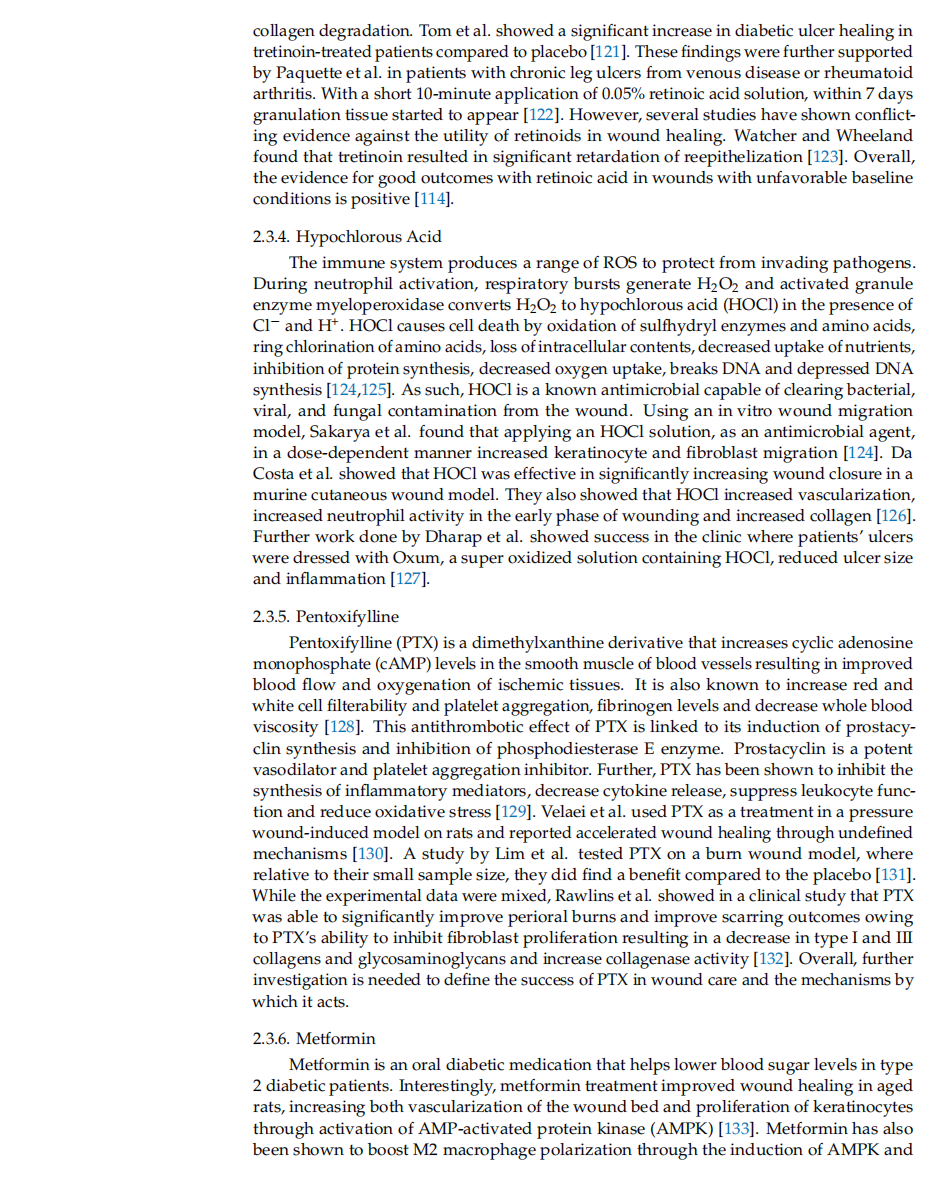
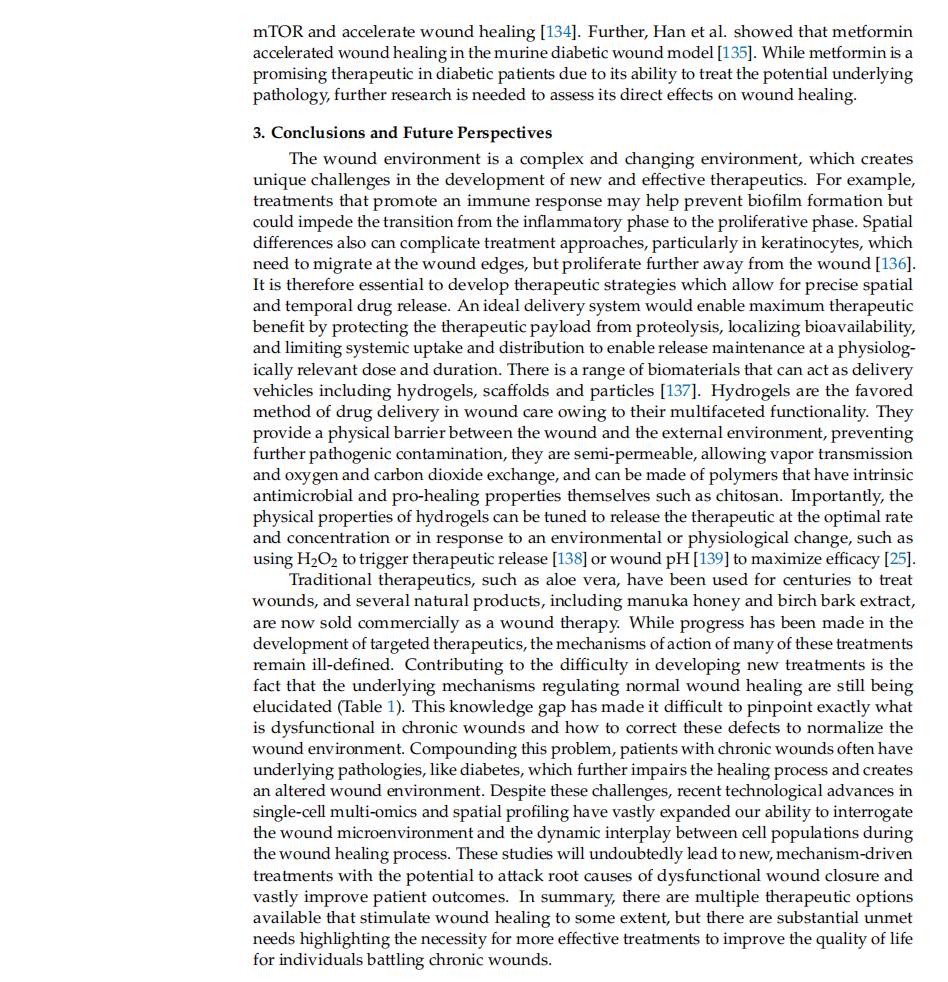
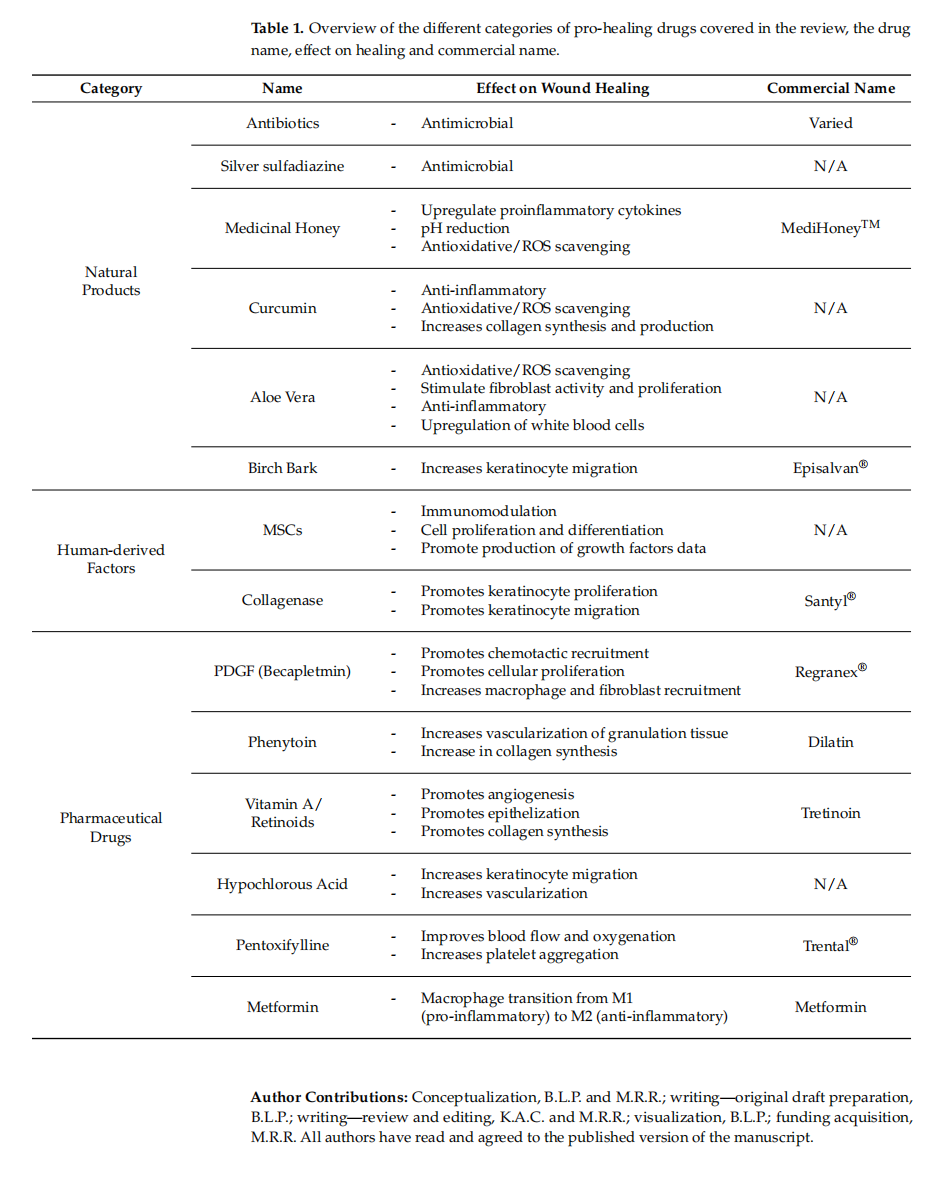
本文转载于Int.J. Mol. Sci. 2024, 25, 1304.,不代表本网站赞同其观点和对其真实性负责,我们只作于阅读分享,非商业用途,如若侵权,请告知删除。
Bethany L. Patenall , Kristyn A. Carter and Matthew R. Ramsey *
Department of Dermatology, Brigham and Women’s Hospital, Harvard Medical School, Boston, MA 02115, USA; 该Email地址已收到反垃圾邮件插件保护。要显示它您需要在浏览器中启用JavaScript。 (K.A.C.)
* Correspondence: 该Email地址已收到反垃圾邮件插件保护。要显示它您需要在浏览器中启用JavaScript。; Tel.: +1-(617)-525-5775
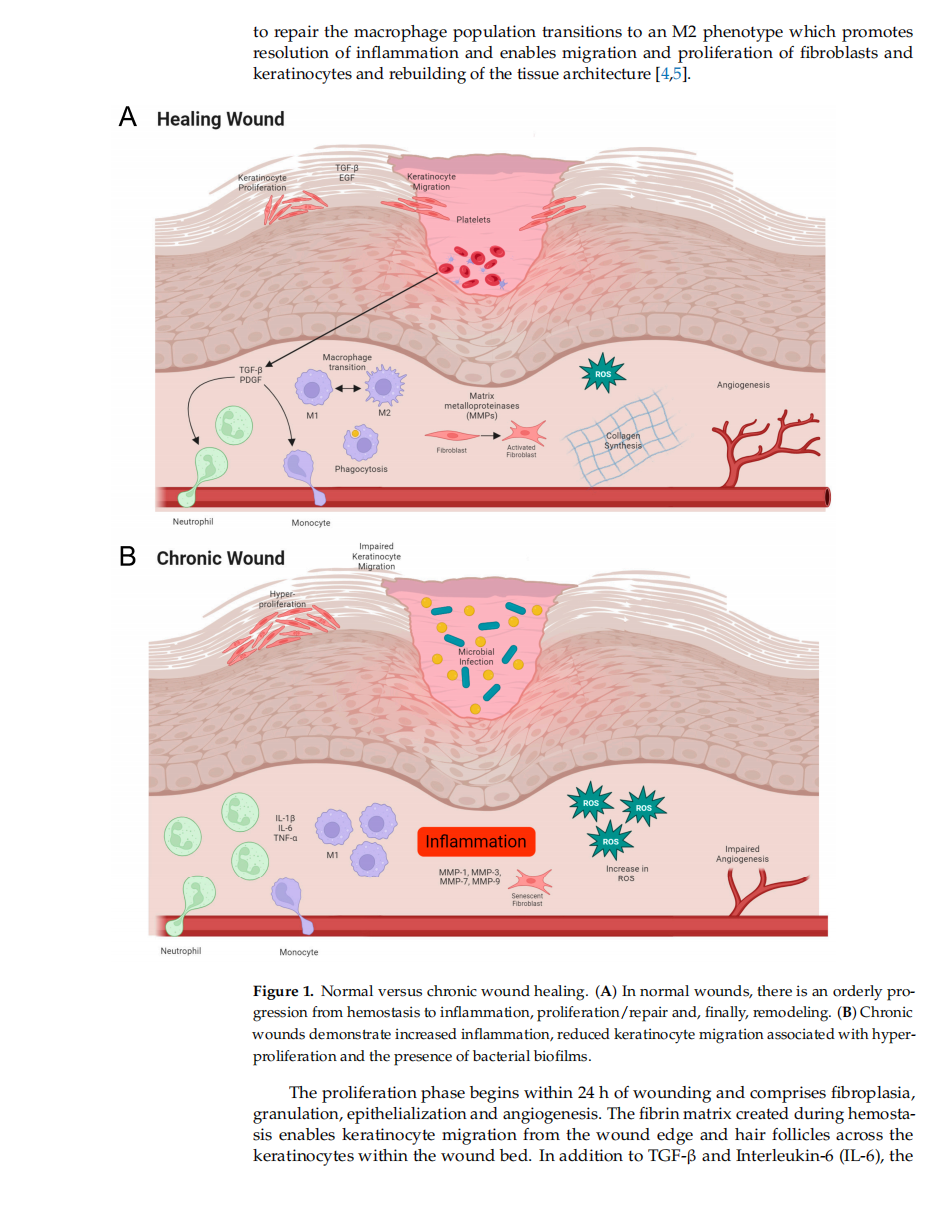
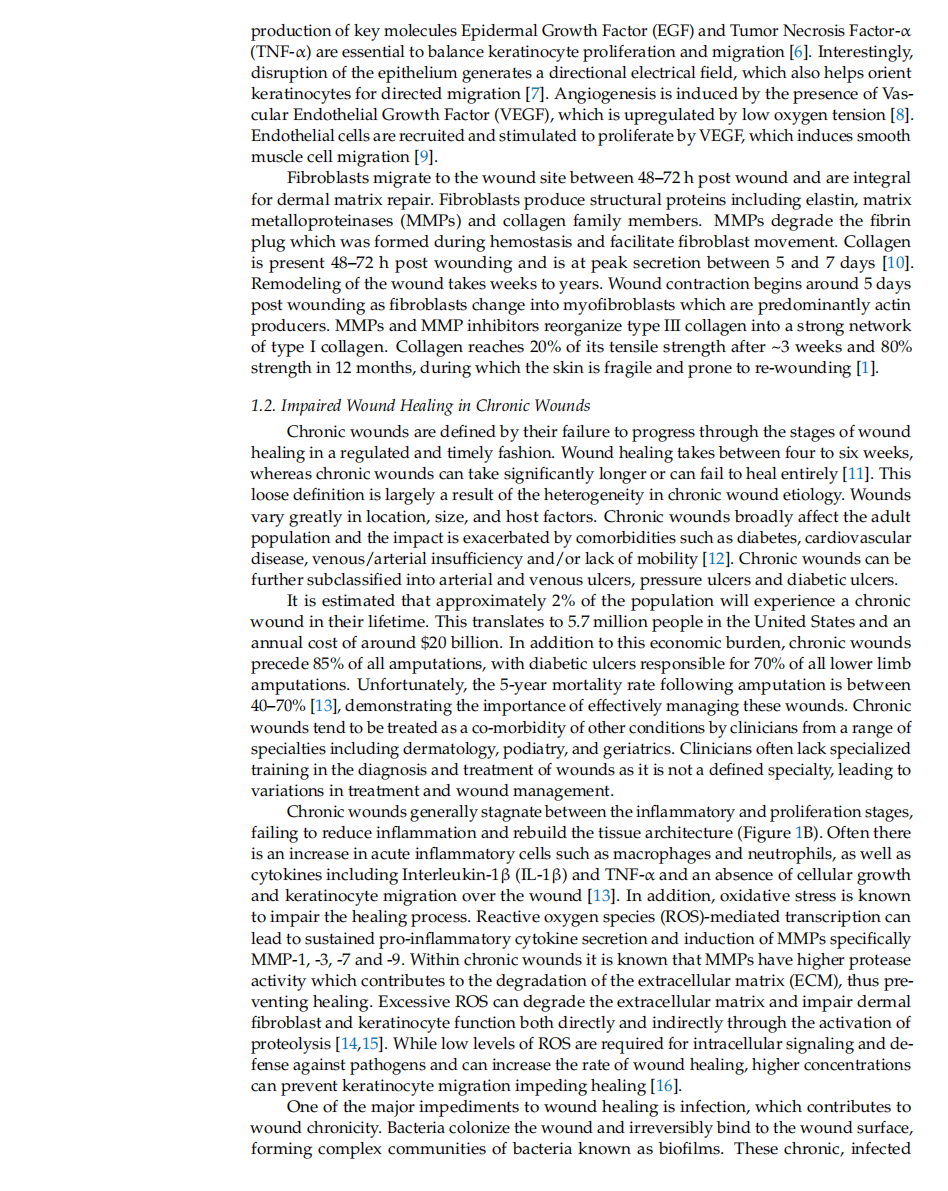
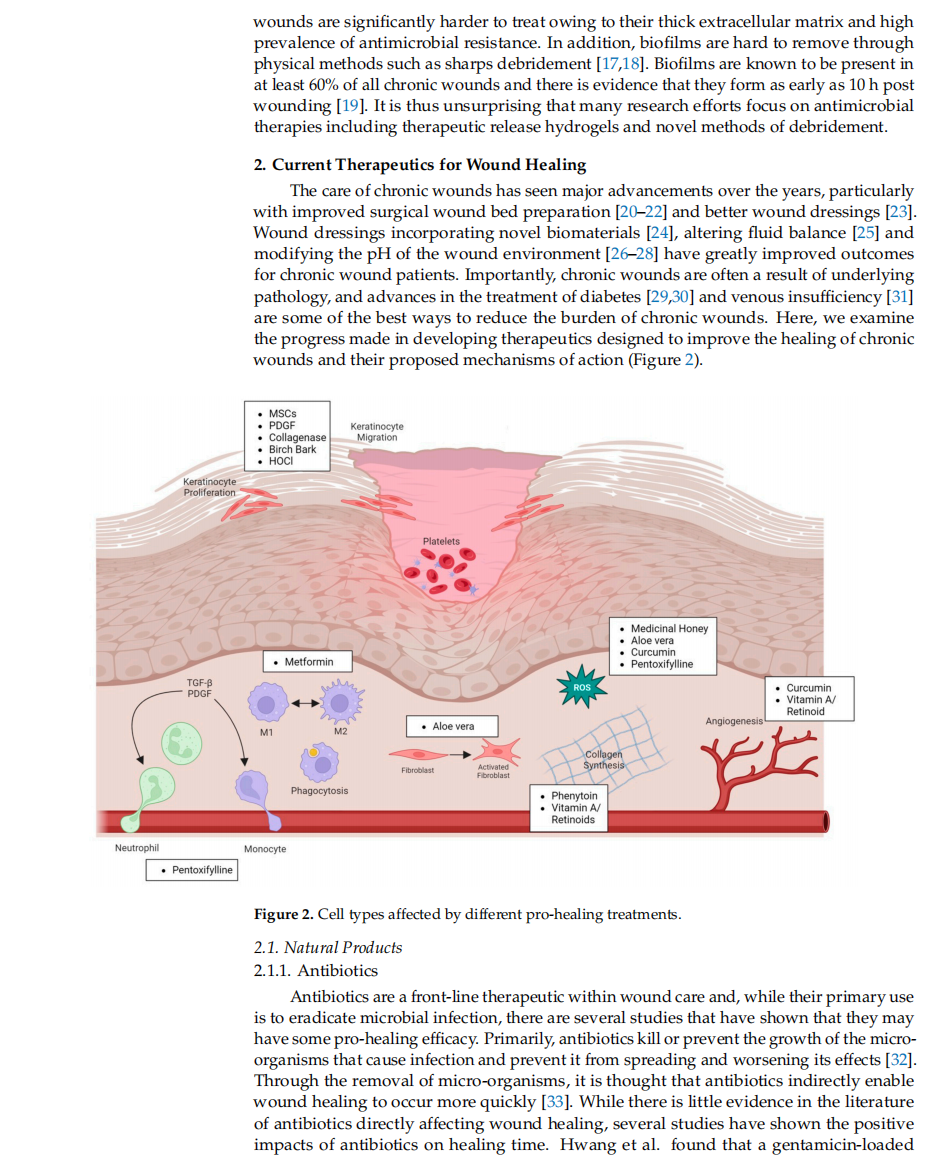
Abstract: Cutaneous wound healing consists of four stages: hemostasis, inflammation, proliferation/repair, and remodeling. While healthy wounds normally heal in four to six weeks, a variety of underlying medical conditions can impair the progression through the stages of wound healing, resulting in the development of chronic, non-healing wounds. Great progress has been made in developing wound dressings and improving surgical techniques, yet challenges remain in finding effective therapeutics that directly promote healing. This review examines the current understanding of the pro-healing effects of targeted pharmaceuticals, re-purposed drugs, natural products, and cell-based therapies on the various cell types present in normal and chronic wounds. Overall, despite several promising studies, there remains only one therapeutic approved by the United States Food and Drug Administration (FDA), Becaplermin, shown to significantly improve wound closure in the clinic. This highlights the need for new approaches aimed at understanding and targeting the underlying mechanisms impeding wound closure and moving the field from the management of chronic wounds towards resolving wounds.
Keywords: chronic wounds; diabetes; wound healing; epithelization; macrophages; biomaterials
本文转载于Int.J. Mol. Sci. 2024, 25, 1304.,不代表本网站赞同其观点和对其真实性负责,我们只作于阅读分享,非商业用途,如若侵权,请告知删除。