
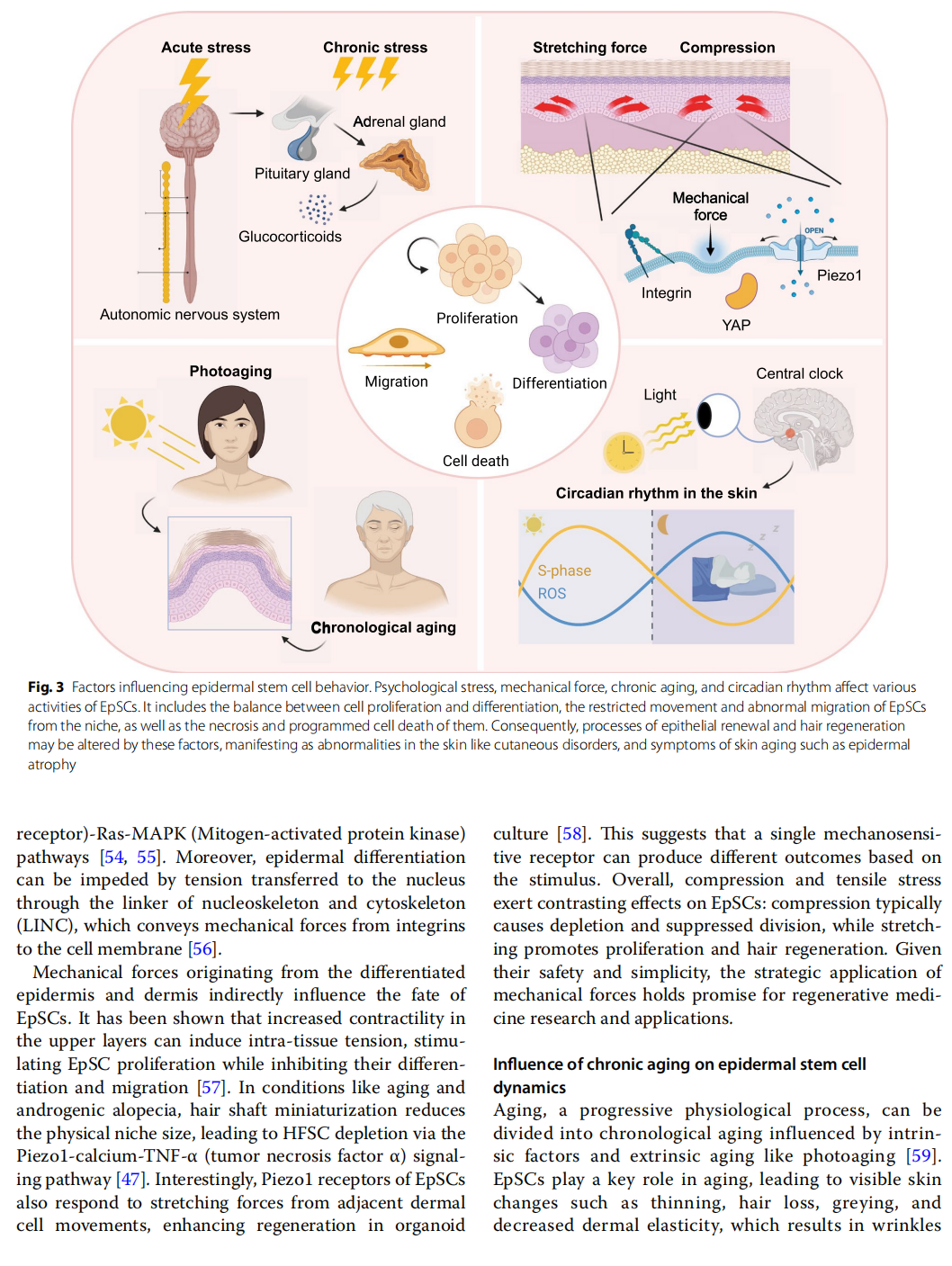
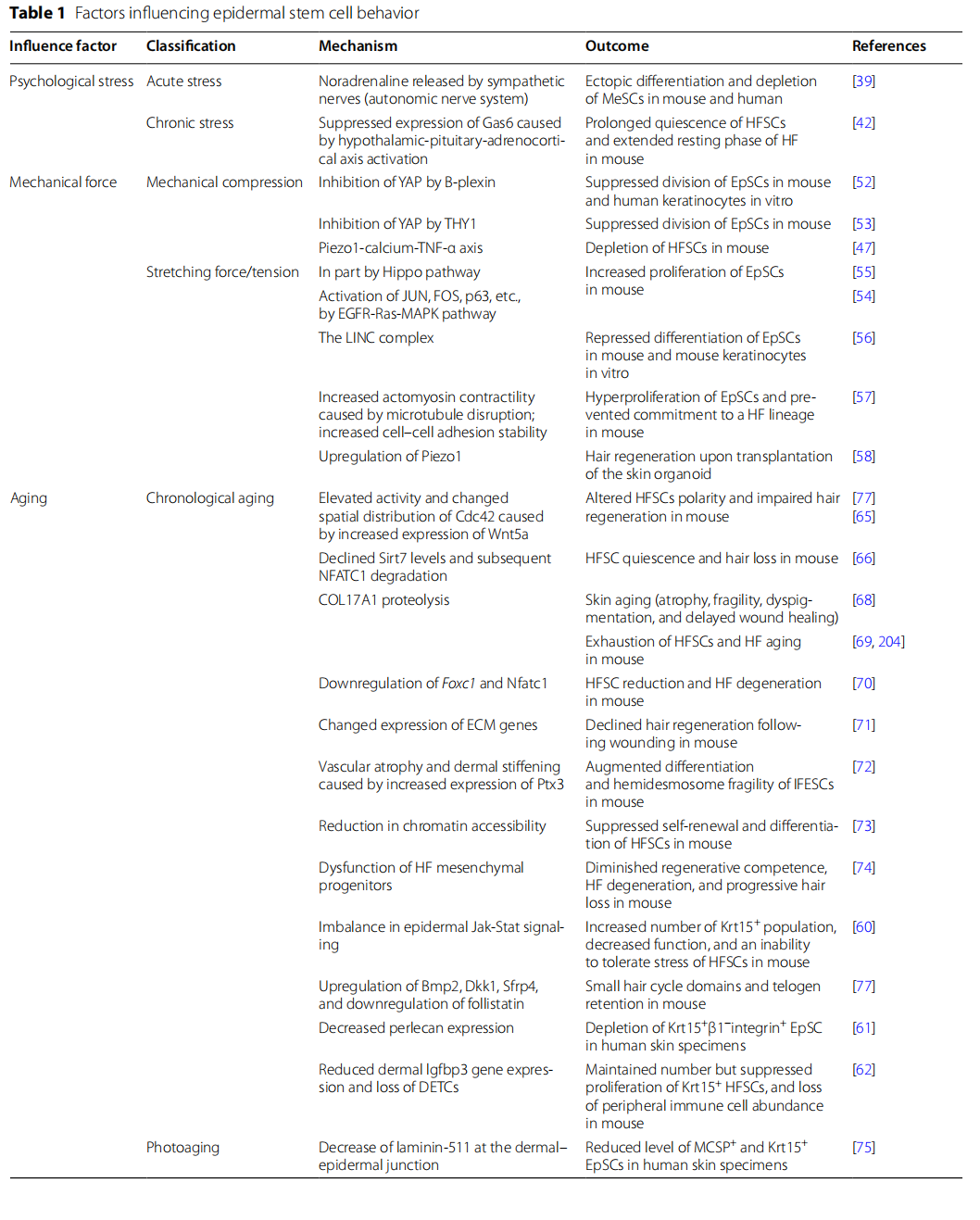
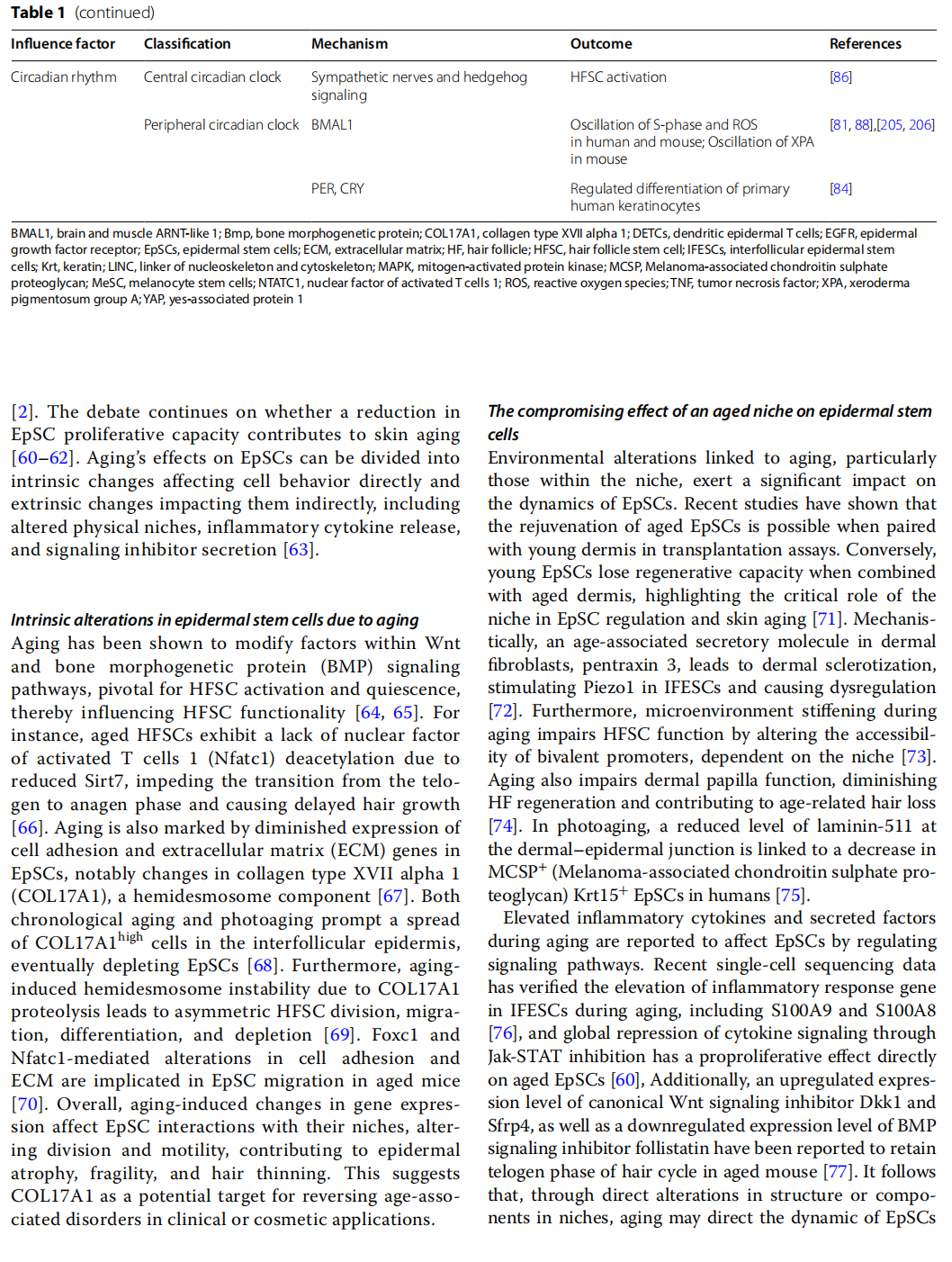
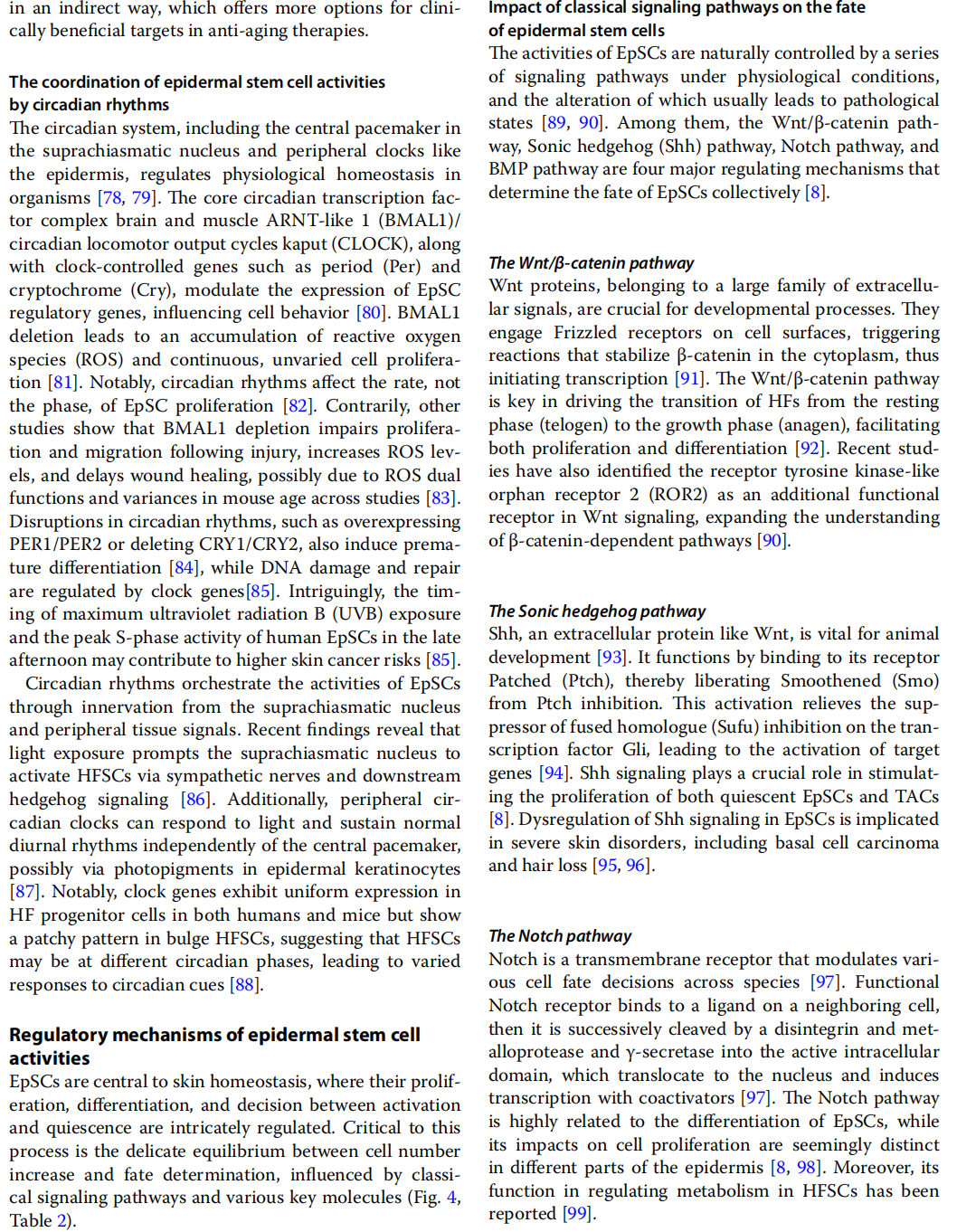
This article is excerpted from the Journal of Translational Medicine (2024) 22:779 by Wound World.

Xin Tang1†, Jiaqi Wang1†, Jiaoling Chen1†, Wanting Liu1 , Pei Qiao1 , Huiyi Quan1 , Zhiguo Li1 , Erle Dang1 , Gang Wang1* and Shuai Shao1*
Abstract
The skin epidermis is continually infuenced by a myriad of internal and external elements. At its basal layer reside epidermal stem cells, which fuels epidermal renovation and hair regeneration with powerful self-renewal ability, as well as keeping diverse signals that direct their activity under surveillance with quick response. The importance of epidermal stem cells in wound healing and immune-related skin conditions has been increasingly recognized, and their potential for clinical applications is attracting attention. In this review, we delve into recent advancements and the various physiological and psychological factors that govern distinct epidermal stem cell populations, including psychological stress, mechanical forces, chronic aging, and circadian rhythm, as well as providing an overview of current methodological approaches. Furthermore, we discuss the pathogenic role of epidermal stem cells in immune-related skin disorders and their potential clinical applications.
Keywords Epidermal stem cells, Aging, Wound healing, Immune-related skin disorders, Regeneration
† Xin Tang, Jiaqi Wang and Jiaoling Chen contributed equally to this work.
*Correspondence:
Gang Wang
该Email地址已收到反垃圾邮件插件保护。要显示它您需要在浏览器中启用JavaScript。
Shuai Shao
该Email地址已收到反垃圾邮件插件保护。要显示它您需要在浏览器中启用JavaScript。
1 Department of Dermatology, Xijing Hospital, Fourth Military Medical University, Xi’an 710032, Shannxi, China
© The Author(s) 2024. Open Access This article is licensed under a Creative Commons Attribution-NonCommercial-NoDerivatives 4.0 International License, which permits any non-commercial use, sharing, distribution and reproduction in any medium or format, as long as you give appropriate credit to the original author(s) and the source, provide a link to the Creative Commons licence, and indicate if you modifed the licensed material. You do not have permission under this licence to share adapted material derived from this article or parts of it. The images or other third party material in this article are included in the article’s Creative Commons licence, unless indicated otherwise in a credit line to the material. If material is not included in the article’s Creative Commons licence and your intended use is not permitted by statutory regulation or exceeds the permitted use, you will need to obtain permission directly from the copyright holder. To view a copy of this licence, visit http://creativecommons.org/licenses/by-nc-nd/4.0/.
This article is excerpted from the Journal of Translational Medicine (2024) 22:779 by Wound World.