 、
、
本文转载于Journal of Pediatric Urology (2022) 18, 271e279,不代表本网站赞同其观点和对其真实性负责,我们只作于阅读分享,非商业用途,如若侵权,请告知删除。
Catherine R. deVries *
Summary
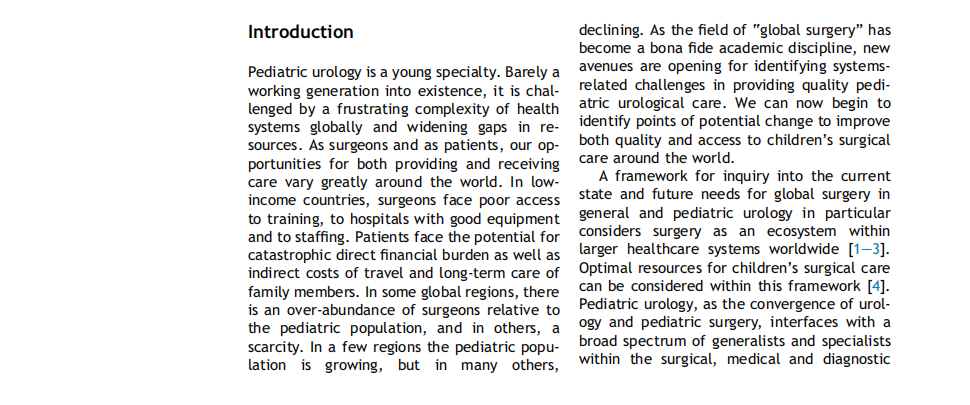
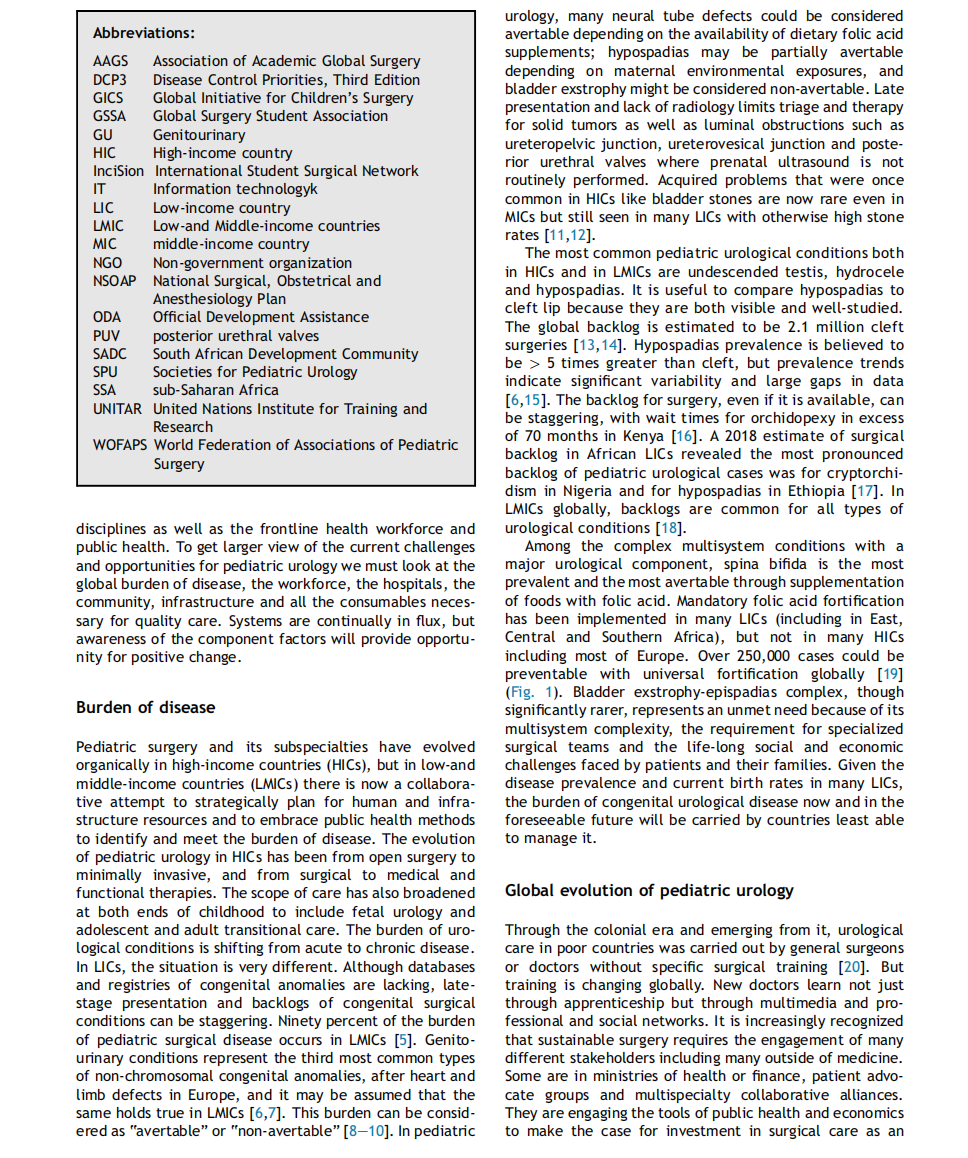
Over the course of approximately 60 years, the field of pediatric urology has evolved as a convergence of pediatric surgery, urology, and plastic surgery to address congenital anomalies of the urinary tract and genitalia in children. Guide-lines for training and certification are narrowing in high-income countries (HICs) at the same time as the fertility rate is declining and the prevalence of complex genitourinary (GU) conditions is decreasing. In low-and middle-income countries (LMICs), health systems for large populations are currently in a state of stress. Here we briefly review the history of pediatric urology as a surgical subspecialty, identify unmet needs especially in LMICs and place the field in the context of a global surgical ecosystem.
Methods
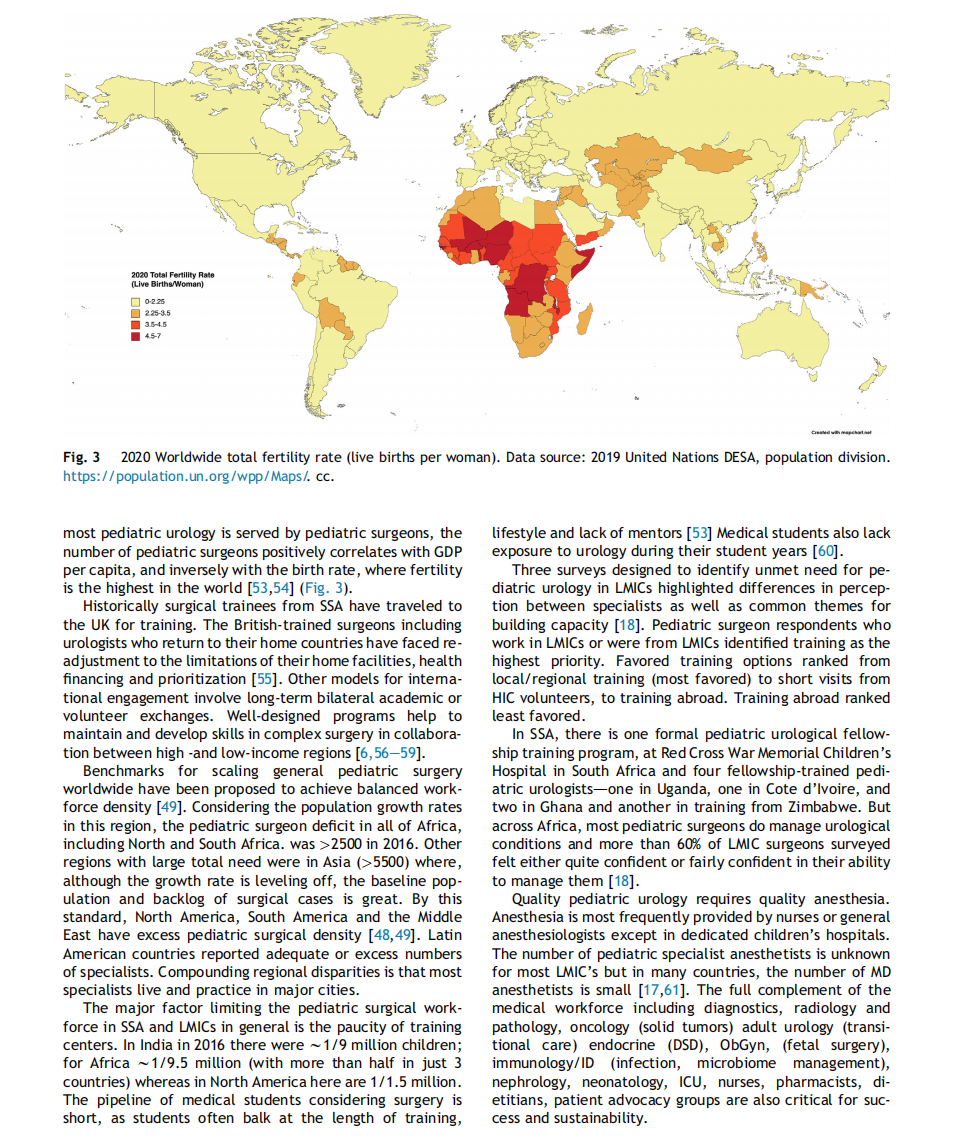
The English language literature on workforce trends in pediatric urology, pediatric surgery and urology was reviewed as well as development of the emerging field of global surgery. Global surgery looks at the social, economic and political context of health systems as well as unmet clinical need. World trends in fertility rates were reviewed to identify regions of workforce surplus and gaps, supply chain needs, infrastructure and systems strengths and weaknesses.
Results
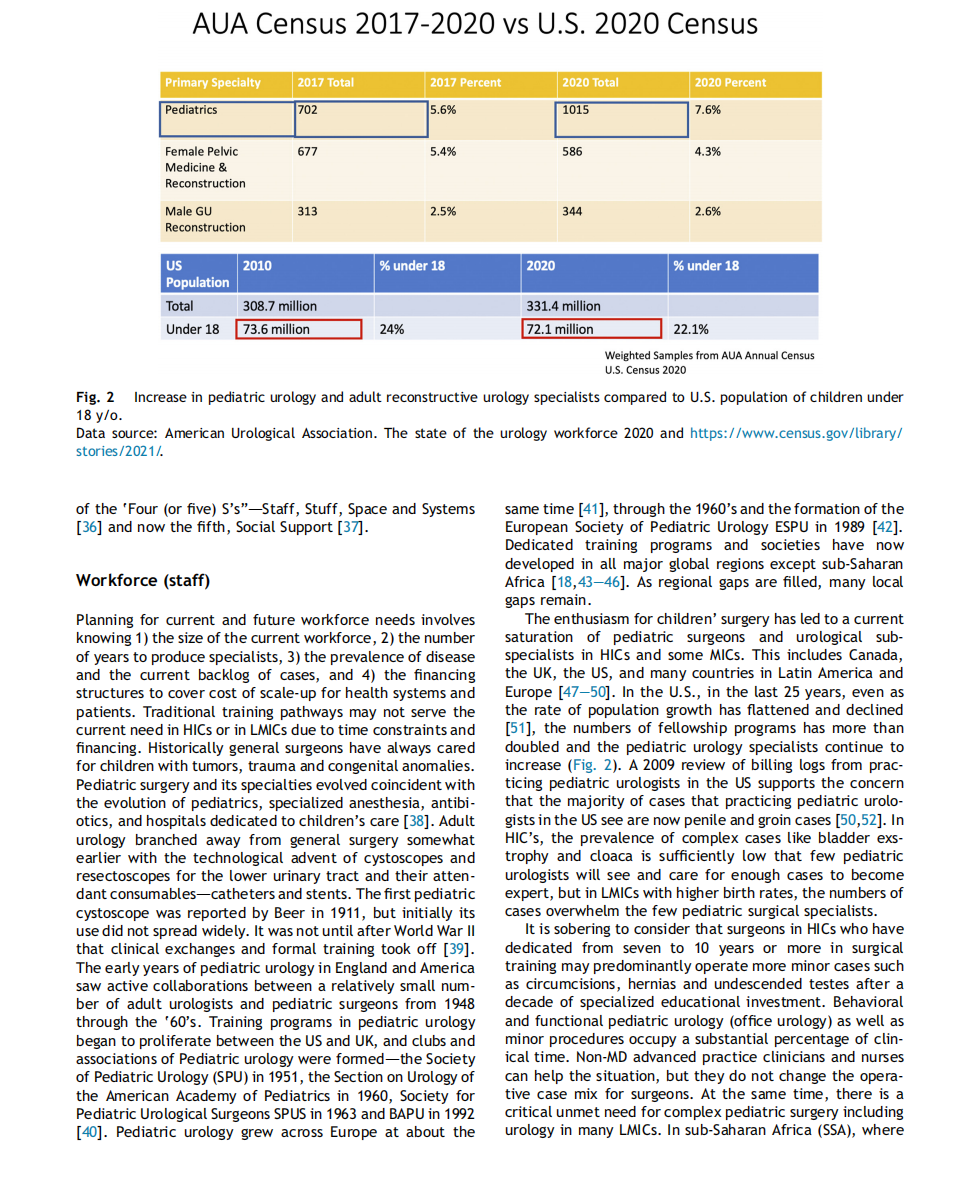
The proliferation of training programs in pediatric surgery and specialties in high-income countries (HICs) coupled with declining birth rates has led to a saturation of specialists and declining surgical case load. In LMICs, while the birth rate has also been declining, surgical specialization has not progressed. In the lowest income countries, especially in sub-Saharan Africa, training in pediatric surgical specialties and urology is rare. The broad workforce that supports surgical care, such as anesthesia, intensivist pediatrics, radiology, laboratory, and nursing face similar challenges. Supply chains for specialized pediatric urological surgery are weak.
Conclusion
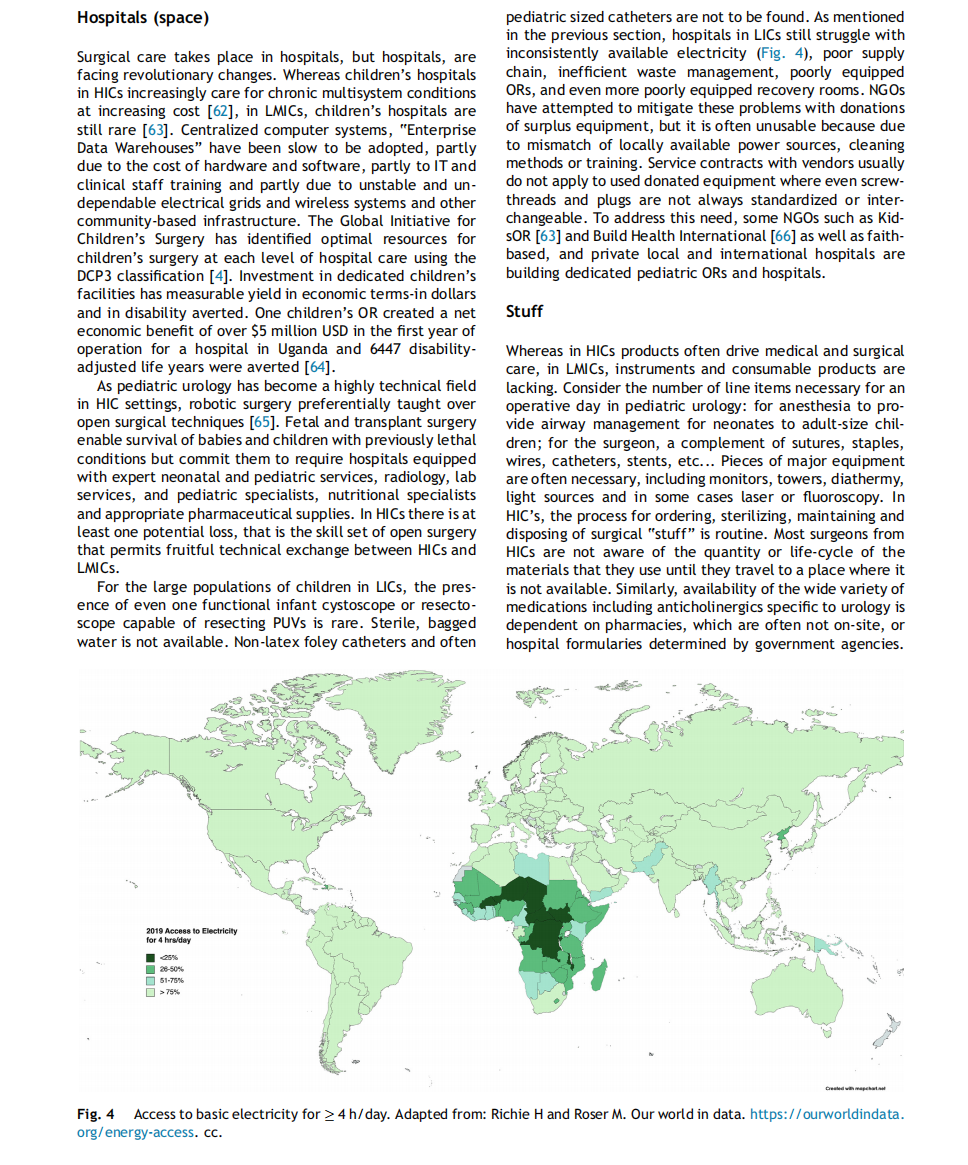
There is an evolving maldistribution of pediatric surgical and pediatric urological workforce globally, with too few practitioners in LMICs and too many in HICs. The high cost of specialized equipment limits access to quality care, and the supply chain for consumables and medication is patchy. In LIC’s, basic community-based infrastructure for health including reliable electricity is lacking. Recent experience with Covid and environmental disasters has highlighted that even in HICs surgical resilience can be challenged. This is an opportunity to consider the state of children’s urological care globally and to build resilience by identifying and addressing strengths and gaps.
、
本文转载于Journal of Pediatric Urology (2022) 18, 271e279,不代表本网站赞同其观点和对其真实性负责,我们只作于阅读分享,非商业用途,如若侵权,请告知删除。