A.Giaccari1 · G. Gliozzo1 · G. Ciccarelli1 · G. Di Giuseppe1 · C. Castellano2 · S. Cum3 · L. Delle Monache4,13 · M. Gallo5 ·M.Lastretti6 · G. Medea7 · M. Monesi8 · R. Napoli9 · B. Pintaudi10 · E. Succurro11 · G. Turchetti
Received: 9 January 2026 / Accepted: 17 March 2026 © The Author(s) 2026
Abstract
Background and aims Although continuous glucose monitoring (CGM) devices are now standard of care among Type 1 diabetes patients, they are still relatively underutilized in Type 2 diabetes (T2D), particularly in those patients not treated with insulin. Widespread adoption continues to be hindered by a combination of factors. Chief among these is the scarcity of long-term, large-scale clinical trials demonstrating the benefits of the use of CGM in T2D. This meta-analysis aimed to address this gap by comparing CGM with self-blood glucose monitoring (SBMG), with primary outcomes of HbA1c and time in range (TIR) in insulin-treated and non-insulin-treated TD2 patients.
Methods and results Following the stringent rules mandated by our National Health Service (which requires a panel com-posed of all stakeholders involved in diabetes treatment, and includes PICO, GRADE, AGREE, and meta-analyses), we performed a systematic review of RCTs that enrolled two groups of individuals with T2D, those treated with insulin (includ-ing basal and basal-bolus regimens), and those receiving treatments other than insulin. All included trials compared CGM with structured blood glucose monitoring (SBGM) with glycated hemoglobin (HbA1c) as the main endpoint. Based on the strength and consistency of the evidence, the panel issued a strong recommendation in favor of CGM for individuals with T2D treated with insulin (including those on basal insulin alone) and for individuals with T2D not treated with insulin, par-ticularly for those with glycated hemoglobin levels≥7%. From a pharmacoeconomic perspective, outcomes were positive in both patient groups.
Conclusion CGM represents a clinically effective and cost-efficient approach to optimizing glycemic control in T2D, becom-ing mandatory among individuals on insulin therapy. Our findings support a shift in clinical practice toward the more widespread use of CGM in T2D, with regulatory frameworks and reimbursement policies needing to adapt accordingly.
Keywords CGM · Type 2 Diabetes · Metanalysis · PICO · GRADE · Guidelines
Communicated by Massimo Federici, M.D.
A. Giaccari 该Email地址已收到反垃圾邮件插件保护。要显示它您需要在浏览器中启用JavaScript。
1 Center for Endocrine and Metabolic Diseases, Fondazione Policlinico Universitario A. Gemelli IRCCS and Università Cattolica del Sacro Cuore, Rome, Italy
2 Azienda USL of Modena, Sassuolo Hospital, Sassuolo, Italy
3 Diabetes and Diabetic Foot Care Unit, ASUGI, Monfalcone, Italy
4 National Board Member of FAND (Italian Association for the Rights of Diabetic People), Roma, Italy
5 Department of Endocrinology and Metabolic Diseases, AO SS. Antonio e Biagio e Cesare Arrigo, Alessandria, Italy
6 Order of Psychologists of Lazio, Rome, Italy
7 Italian Society of General Medicine (SIMG), Florence, Italy
8 Territorial Diabetology Unit, AUSL Ferrara, Ferrara, Italy
9 Department of Translational Medical Sciences, University of Naples Federico II, Naples, Italy
10 Diabetes Unit, Niguarda Cà Granda Hospital, Milan, Italy
11 Department of Medical and Surgical Sciences, Magna Graecia University, Catanzaro, Italy
12 Institute of Management, Scuola Superiore Sant’Anna, Pisa, Italy
13 Patient Advocacy Lab, ALTEMS – Università Cattolica del Sacro Cuore, Rome, Italy
版权归中华医学会所有。
未经授权,不得转载、摘编本刊文章。
引用本文:简喜超, 简扬, 邓呈亮. 2025版《中国糖尿病足防治实践指南》解读[J]. 中华医学美学美容杂志, 2026, 32(2): 99-103. DOI: 10.3760/cma.j.cn114657-20251215-00266.
通信作者:邓呈亮,Email:该Email地址已收到反垃圾邮件插件保护。要显示它您需要在浏览器中启用JavaScript。
原创: 胡海涛 负压引流与创面修复
糖尿病患者,出现足部伤口,长时间不愈合,诊断啥?
糖尿病足?
根据糖尿病这个基础疾病,合并不愈合的足部伤口,大多数人首先想到糖尿病足!
分享一个案例:
男性患者,81岁,左足背红肿疼痛2月。既往有2型糖尿病、高血压病史多年。
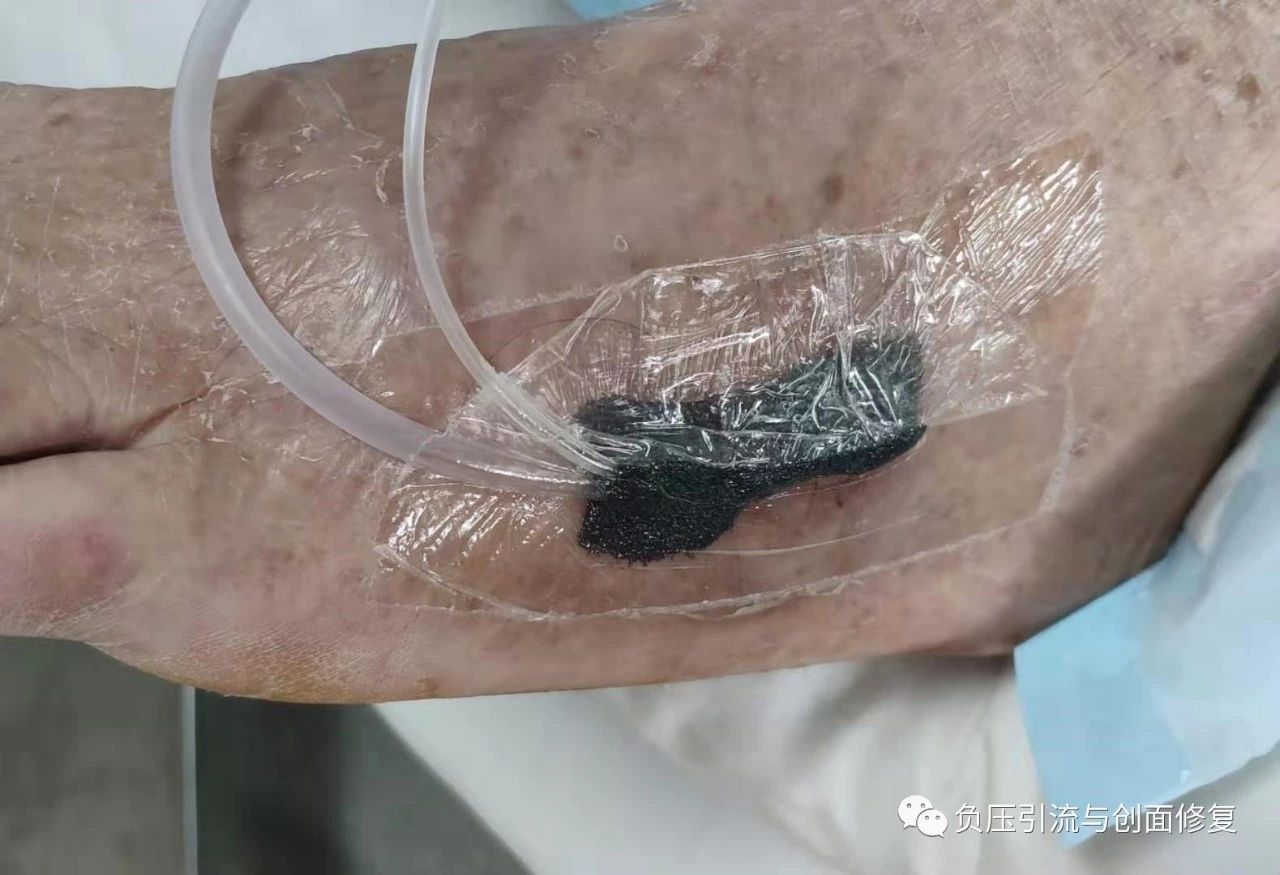
患者2月前足背出现破溃,就诊当地医院,予清除+局部换药+封闭式负压引流治疗,仍未愈合。
查体:负压引流后
辅助检查:糖化血红蛋白 7.4%,肌酐 125mmol/L,尿酸509umol/L,左下肢动脉彩超提示动脉硬化,胫前后、足背动脉阶段性轻度狭窄。
初步诊断:
左侧2型糖尿病足溃疡
慢性肾功能不全(氮质血症期)
2型糖尿病
高血压病
高尿酸血症
治疗:控制血糖、改善循环、局部负压引流
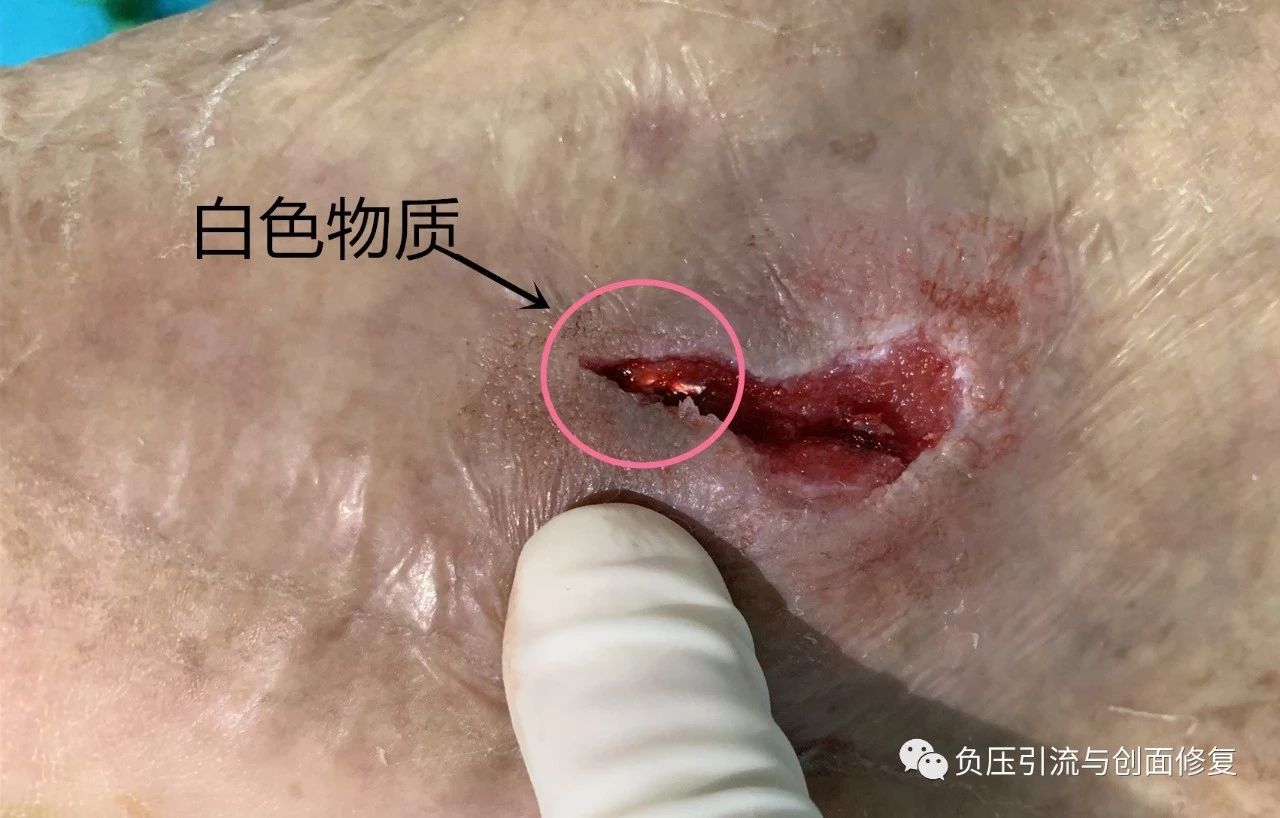
肉芽红润,伤口不愈合;红肿消了,为啥剧烈疼痛呢?
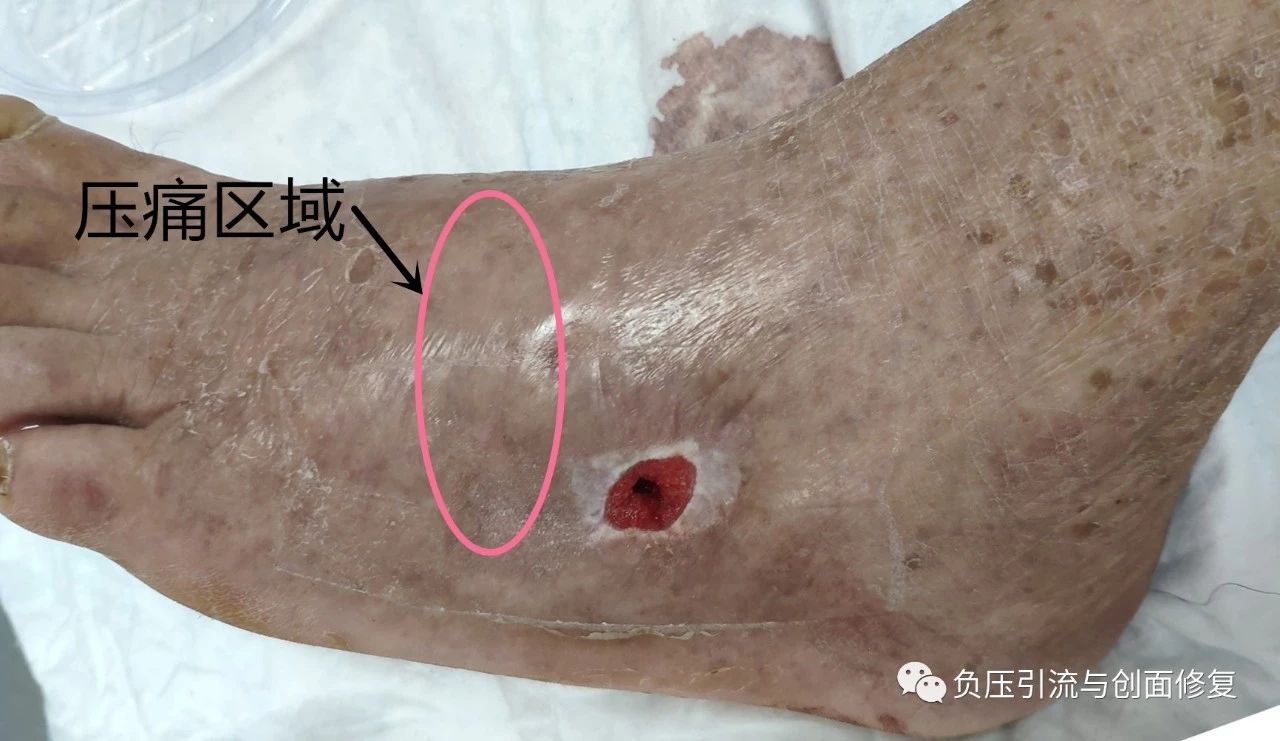
高度怀疑痛风石,导致的足部溃疡、疼痛、阻碍愈合! 什么检查,可以确诊是痛风石引起的疼痛呢? 就是双能CT,绿色部分为痛风石:
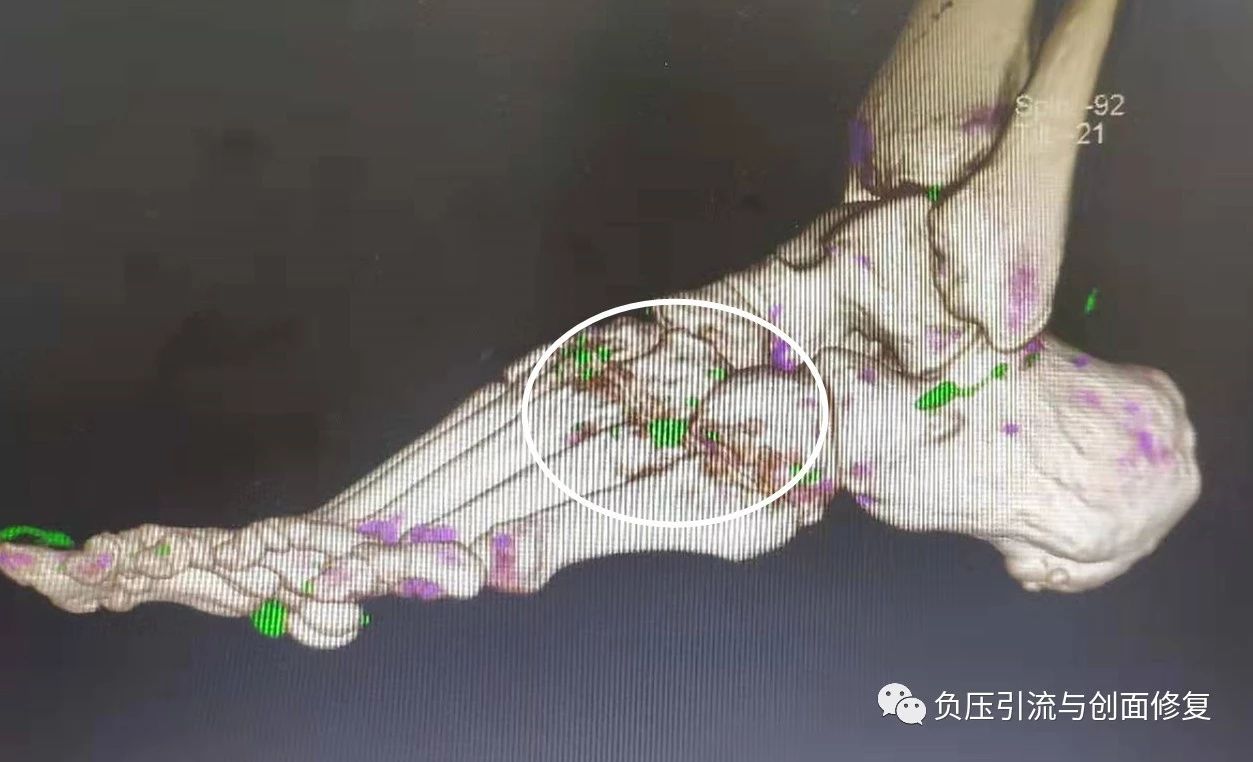
报告:
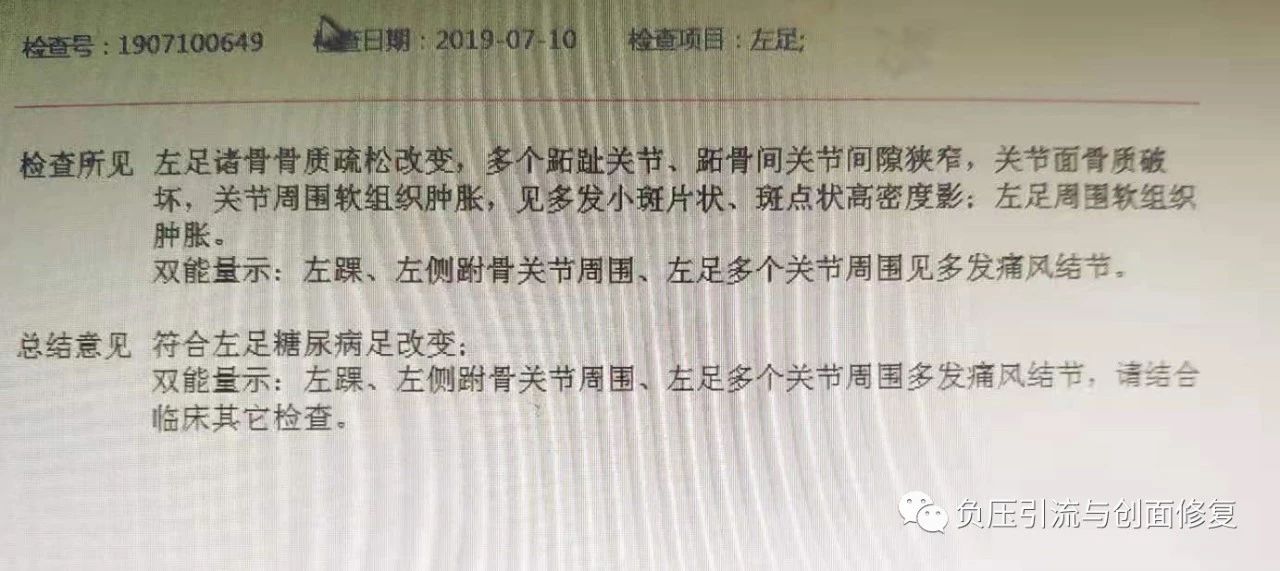
修正诊断:左足痛风性结节并破溃
调整治疗方案:
局部改普通换药:痛风性伤口,使用负压引流,无效果;
管好嘴:
加用降尿酸药物:对于已形成痛风性关节炎、痛风结石的患者,需要药物来协助溶解关节内的痛风石,然后通过尿液排出。代表药物有苯溴马隆、别嘌呤醇片、非布司他片等;
补充益生菌:体内物质的吸收、合成、分解、排泄与肠道内的益生菌关节密切,补充“益生菌”的思路是直接吃进活的细菌类似于空投一些“好细菌”来抑制“坏细菌”;
多喝水
伤口世界平台生态圈,以“关爱人间所有伤口患者”为愿景,连接、整合和拓展线上和线下的管理慢性伤口的资源,倡导远程、就近和居家管理慢性伤口,解决伤口专家的碎片化时间的价值创造、诊疗经验的裂变复制、和患者的就近、居家和低成本管理慢性伤口的问题。
2019广东省医疗行业协会伤口管理分会年会
扫一扫了解详情:
任何关于疾病的建议都不能替代执业医师的面对面诊断。所有门诊时间仅供参考,最终以医院当日公布为准。
网友、医生言论仅代表其个人观点,不代表本站同意其说法,请谨慎参阅,本站不承担由此引起的法律责任。