This article is excerpted from the 《Frontiers in Public Healthy》 by Wound World.

Taynara Formagini1,2 *, Joanna Veazey Brooks2,3,4 , Andrew Roberts2,5 , Kai McKeever Bullard6 , Yan Zhang6 , Ryan Saelee6 and Matthew James O'Brien7
1 Department of Family Medicine, University of California San Diego, San Diego, CA, United States,
2 Department of Population Health, University of Kansas School of Medicine, Kansas City, KS, United States, 3University of Kansas Cancer Center, Kansas City, KS, United States, 4Division of Palliative Medicine, University of Kansas School of Medicine, Kansas City, KS, United States, 5Aetion Inc., New York, NY, United States, 6Division of Diabetes Translation, National Center for Chronic Disease Prevention and Health Promotion, CDC, Atlanta, GA, United States, 7 Department of Medicine, Division of General Internal Medicine and Geriatrics, Northwestern University Feinberg School of Medicine, Chicago, IL, United States
Introduction: Racial and ethnic minority groups and individuals with limited educational attainment experience a disproportionate burden of diabetes. Prediabetes represents a high-risk state for developing type 2 diabetes, but most adults with prediabetes are unaware of having the condition. Uncovering whether racial, ethnic, or educational disparities also occur in the prediabetes stage could help inform strategies to support health equity in preventing type 2 diabetes and its complications. We examined the prevalence of prediabetes and prediabetes awareness, with corresponding prevalence ratios according to race, ethnicity, and educational attainment.
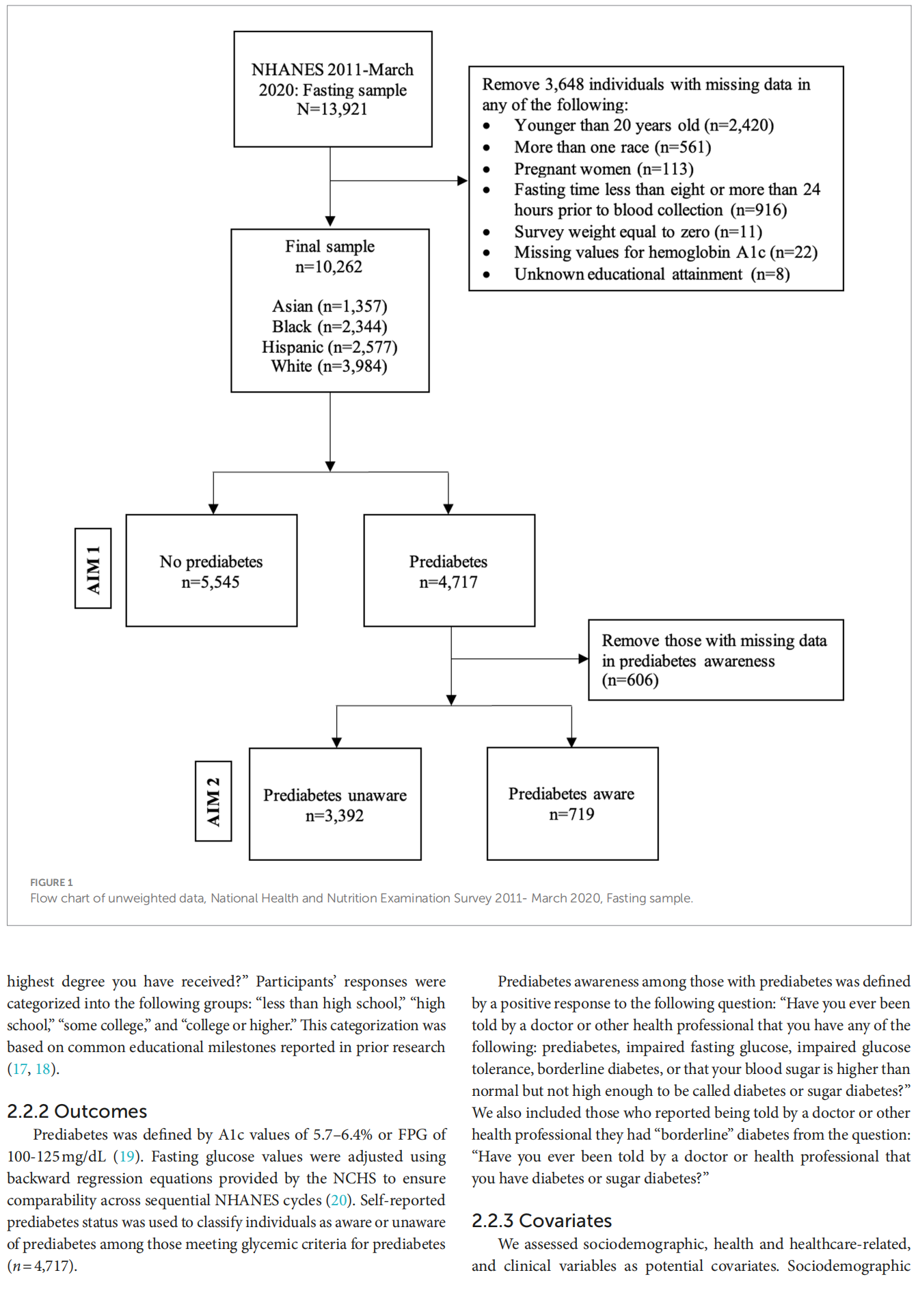
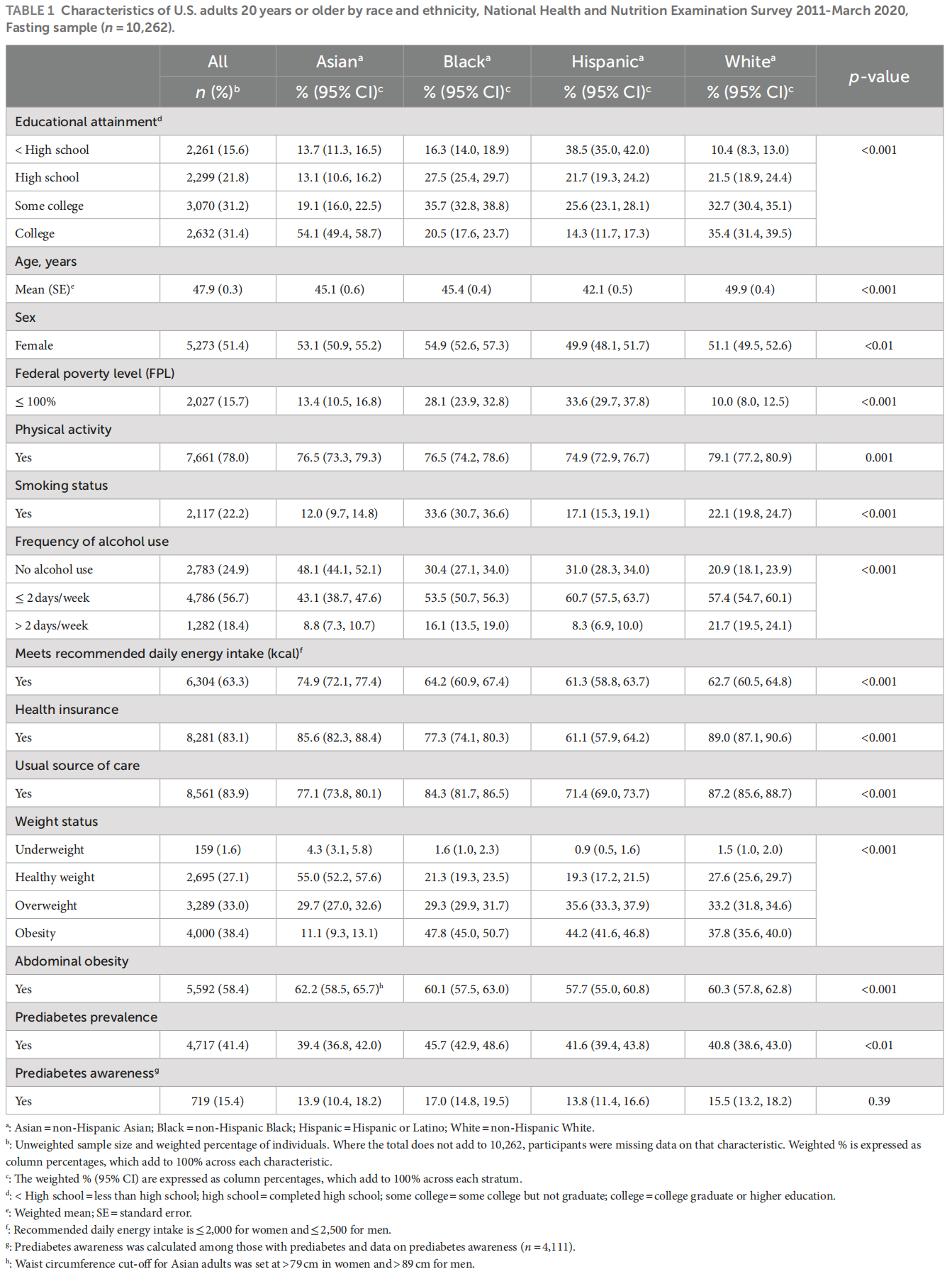
Methods: This study was a pooled cross-sectional analysis of the National Health and Nutrition Examination Survey data from 2011 to March 2020. The final sample comprised 10,262 U.S. adults who self-reported being Asian, Black, Hispanic, or White. Prediabetes was defined using hemoglobin A1c and fasting plasma glucose values. Those with prediabetes were classified as “aware” or “unaware” based on survey responses. We calculated prevalence ratios (PR) to assess the relationship between race, ethnicity, and educational attainment with prediabetes and prediabetes awareness, controlling for sociodemographic, health and healthcare-related, and clinical characteristics.
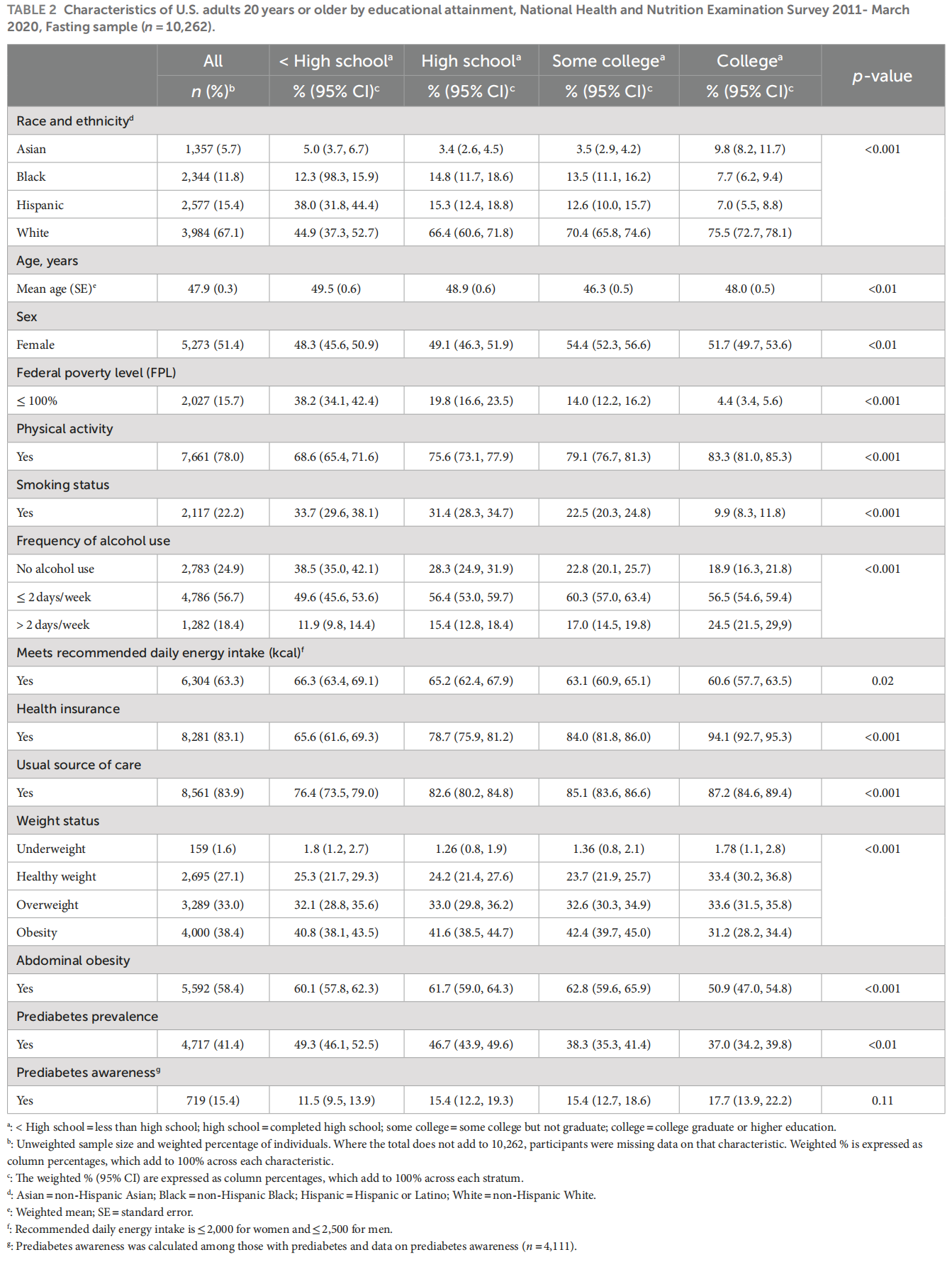
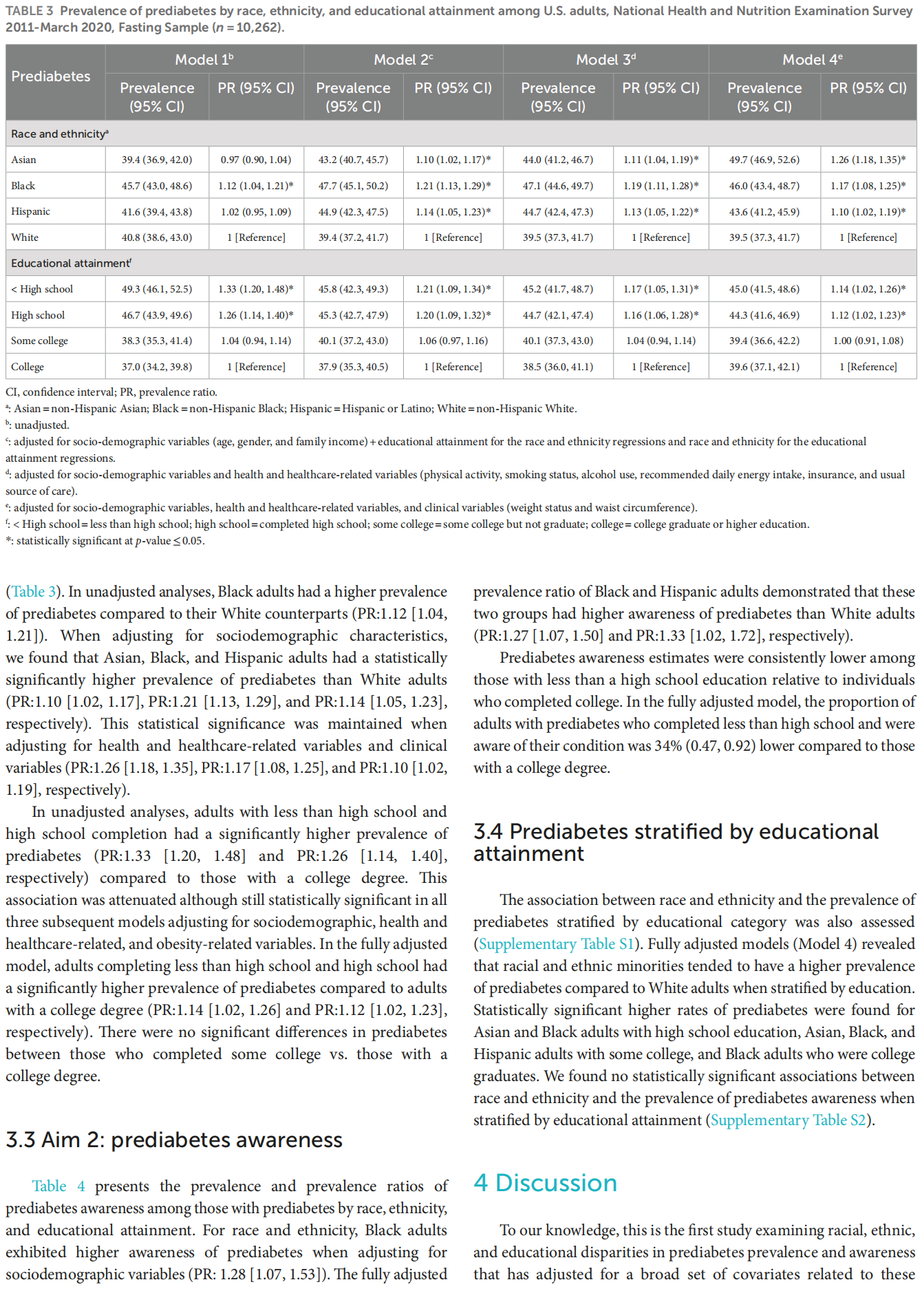
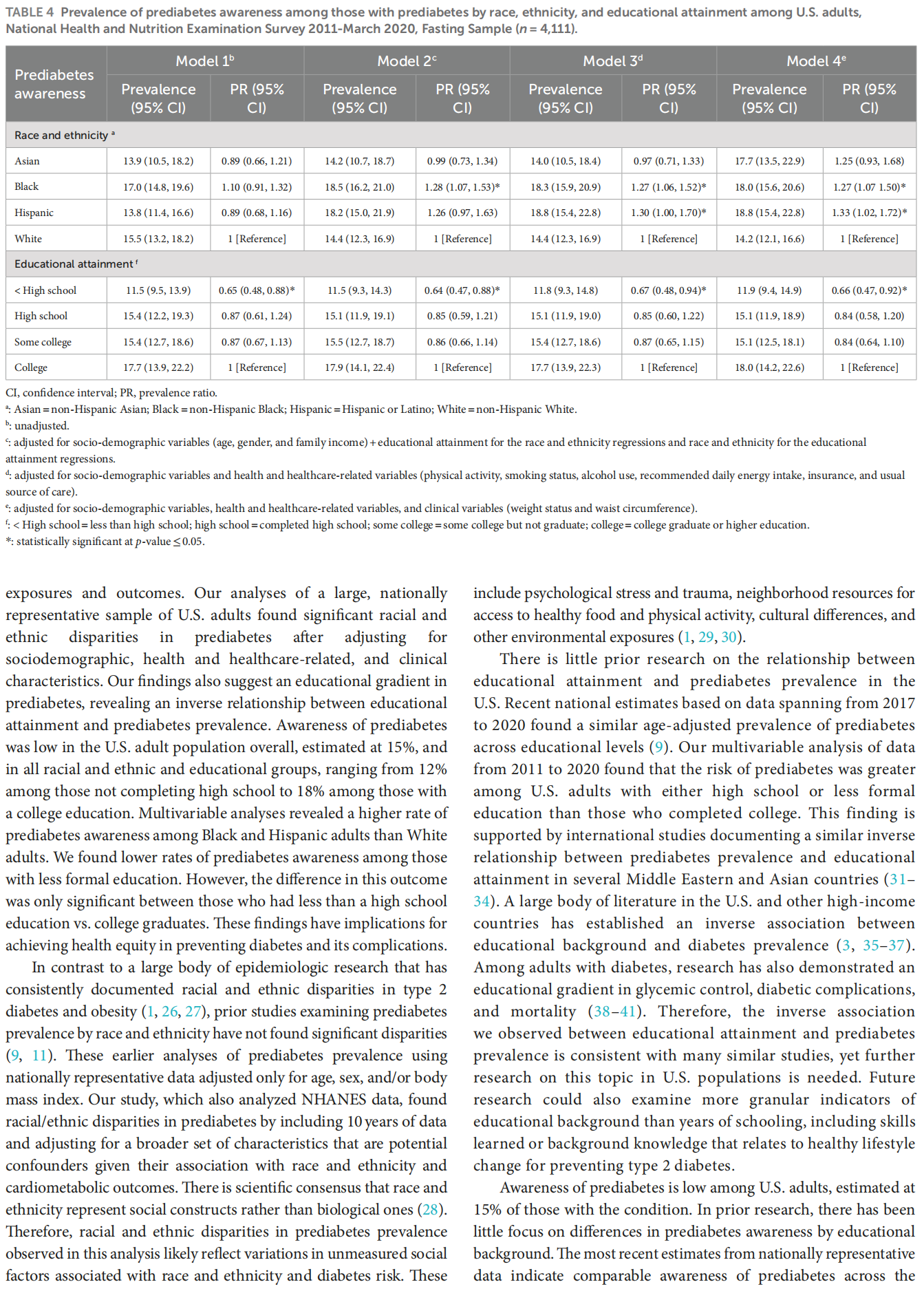
Results: In fully adjusted logistic regression models, Asian, Black, and Hispanic adults had a statistically significant higher risk of prediabetes than White adults (PR:1.26 [1.18,1.35], PR:1.17 [1.08,1.25], and PR:1.10 [1.02,1.19], respectively). Adults completing less than high school and high school had a significantly higher risk of prediabetes compared to those with a college degree (PR:1.14 [1.02,1.26] and PR:1.12 [1.01,1.23], respectively). We also found that Black and Hispanic adults had higher rates of prediabetes awareness in the fully adjusted model than White adults (PR:1.27 [1.07,1.50] and PR:1.33 [1.02,1.72], respectively). The rates of prediabetes awareness were consistently lower among those with less than a high school education relative to individuals who completed college (fully-adjusted model PR:0.66 [0.47,0.92]).
Discussion: Disparities in prediabetes among racial and ethnic minority groups and adults with low educational attainment suggest challenges and opportunities for promoting health equity in high-risk groups and expanding awareness of prediabetes in the United States.
KEYWORDS
prediabetes, prediabetes awareness, diabetes-related disparities, race and ethnicity, educational attainment
This article is excerpted from the 《Frontiers in Public Healthy》 by Wound World.