T. Fukuyama1 | B. C. Martel1 | K. E. Linder2 | S. Ehling1 | J. R. Ganchingco1 | W. B€aumer1,3
Summary
Background: It has been reported that topical hypochlorous acid (HOCl) formulations lead to relief of itch in human patients with atopic dermatitis; however, the specific antipruritic mechanism of action remains unclear.
Objective: To confirm itch relief and reduction of lesions in a mouse model of atopic dermatitis and to elucidate possible HOCl’s mode of action.
Methods: In this study, the effects of topical administration of HOCl hydrogel (0.05%) on atopic dermatitis-like lesions in NC/Nga mice model as well as in vitro effects of HOCl on dorsal root ganglia neurons and mouse bone marrow-derived dendritic cells (mBMDCs) were investigated. NC/Nga mice were sensitized with house dust mite allergen and treated topically with HOCl hydrogel both preventively and therapeutically against established lesions. Allergen challenge was continued during HOCl hydrogel application.
Results: Treatment with HOCl hydrogel prevented the development of lesions and scratching bouts during the whole observation period. When administered after full development of lesions, HOCl reduced lesions and scratching behaviour to a similar extent as a positive control 0.1% betamethasone dipropionate ointment. The reduced inflammatory response by HOCl treatment was demonstrated by reduced secretion of inflammatory cytokines in affected skin tissue from NC/Nga mice. In addition, HOCl significantly reduced IL-12 production in mBMDC. The diminished scratching behaviour was confirmed by impaired response to several pruritogens in dorsal root ganglia neurons excised from NC/Nga mice after termination of the studies. The response to the stimuli was also reduced by pre-incubation of sensory neurons from untreated BALB/c mice with 0.0001% HOCl. Conclusions and Clinical Relevance: These data indicate a direct reduction in sensory response by HOCl, leading to significantly reduced itch and inflammation in vivo.
KEYWORDS
atopic dermatitis, dorsal root ganglia, hypochlorous acid, IgE, IL-13, IL-4, NC/Nga mice, sensory neurons
中国医师协会介入医师分会临床诊疗指南专委会
通信作者:滕皋军,东南大学附属中大医院介入与血管外科,南京 210009,Email:该Email地址已收到反垃圾邮件插件保护。要显示它您需要在浏览器中启用JavaScript。
【摘要】 经动脉介入治疗(TAI)应用于肝细胞癌(HCC),主要包括经动脉化疗栓塞(TACE)、经动脉栓塞(TAE)、肝动脉灌注化疗(HAIC)和选择性内放射治疗(SIRT)。TACE是治疗不可切除HCC的首选方法,中国医师协会介入医师分会(CCI)分别于2018、2021和2023年制订并更新了《中国肝细胞癌经动脉化疗栓塞(TACE)治疗临床实践指南》,为规范我国 TACE 临床实践发挥了重要作用。近年来,HAIC、SIRT在国内的应用日趋广泛并不断规范。随着TAI技术的进步、治疗理念的更新以及近年来高级别循证医学证据的出现,CCI在既往指南内容基础上,整合TACE、HAIC、SIRT内容并更新颁布《中国肝细胞癌经动脉介入治疗临床实践指南(2026版)》。本指南以最新循证医学证据为基础,结合我国临床实践,涵盖了TAI应用于HCC治疗的新进展,从临床诊断标准与分期、患者适应证与禁忌证、操作流程及要求、围手术期处理、常见并发症及处理、随访及疗效评价、联合治疗、质量控制及热点和展望等方面阐述,旨在进一步规范TAI在HCC治疗中的应用。
【关键词】 癌,肝细胞; 介入放射学,治疗性; 实践指南; 经动脉介入治疗
实践指南注册:国际实践指南注册与透明化平台(PREPARE‑2025CN046)
Chinese clinical practice guidelines for transarterial interventions of hepatocellular carcinoma (2026 edition)
Clinical Guidelines Committee of Chinese College of Interventionalists
Corresponding author: Teng Gaojun, Center of Interventional Radiology & Vascular Surgery, Department of Radiology, Zhongda Hospital, Southeast University, Nanjing 210009, China, Email: 该Email地址已收到反垃圾邮件插件保护。要显示它您需要在浏览器中启用JavaScript。
【Abstract】 Transarterial interventions (TAI) for hepatocellular carcinoma (HCC) include transarterial chemoembolization (TACE), transarterial embolization (TAE), hepatic arterial infusion chemotherapy (HAIC), and selective internal radiation therapy (SIRT). TACE remains the first‑line treatment for unresectable HCC. Chinese College of Interventionalists (CCI) previously issued and updated the Chinese Clinical Practice Guidelines of TACE for HCC in 2018, 2021, and 2023, which have played a pivotal role in standardizing TACE procedures in China. In recent years, the application of HAIC and SIRT has become increasingly widespread and standardized in China. With the continuous advancement of TAI techniques, the evolution of therapeutic concepts, and the emergence of high‑level evidence, CCI has comprehensively revised and expanded its previous guidelines. The updated Chinese clinical practice guidelines for transarterial interventions of hepatocellular carcinoma (2026 edition) now formally incorporates TACE, HAIC, and SIRT as standard treatment modalities. With the aims to further standardize the use of TAI in the management of HCC, this guideline is developed based on the most current evidence‑based medical research, integrates China‑specific clinical practices, and incorporates the latest advancements in TAI for HCC. It elaborates on clinical diagnostic criteria and staging, patient indications and contraindications, operational procedures and requirements, perioperative management, common complications management, follow‑up and efficacy evaluation, combination therapy, quality control, as well as hot topics and prospects.
【Key words】 Carcinoma, hepatocellular; Interventional radiology, therapeutic; Practice guideline; Transarterial interventions
Practice guideline registration: Practice Guideline Registration for Transparency (PREPARE‑2025CN046)
原创: 胡海涛 负压引流与创面修复
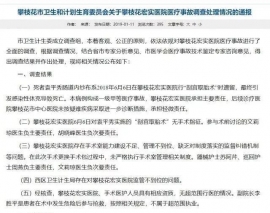
攀枝花市卫生计生委,依据《中华人民共和国执业医师法》《医疗事故处理条例》等相关法律法规,责令西区卫生计生局对承担主要责任的攀枝花宏实医院及其涉责医务人员作出处理:吊销攀枝花宏实医院《医疗机构执业许可证》;吊销主持术前讨论和手术主刀的医生文莉琼《医师执业证书》;吊销器械护士苏阿芹《护士执业证书》;吊销巡回护士周燕《护士执业证书》;暂停参与术前讨论的医生胡晓峰执业活动。
伤口爱好者,如何避免,如何避免不发生在自己身上?
原创: 无限di渴望 负压引流与创面修复
套装VSD价格昂贵:让很多患者望而却步,同时也让很多医护人员退避三舍!
现实:褥疮患者入院时,脏、脏、很脏,也很恶臭,他们的亲人也是捂着鼻子远远的站着,看到这个患者,就能知道他一定是色、臭、味俱全!
遇到下肢溃疡,如大隐静脉曲张性溃疡、小腿外伤、深静脉血栓后遗症、动脉闭塞性等等,都比较难愈合,原因有以下若干:
伤口世界平台生态圈,以“关爱人间所有伤口患者”为愿景,连接、整合和拓展线上和线下的管理慢性伤口的资源,倡导远程、就近和居家管理慢性伤口,解决伤口专家的碎片化时间的价值创造、诊疗经验的裂变复制、和患者的就近、居家和低成本管理慢性伤口的问题。
2019广东省医疗行业协会伤口管理分会年会
扫一扫了解详情:
任何关于疾病的建议都不能替代执业医师的面对面诊断。所有门诊时间仅供参考,最终以医院当日公布为准。
网友、医生言论仅代表其个人观点,不代表本站同意其说法,请谨慎参阅,本站不承担由此引起的法律责任。